
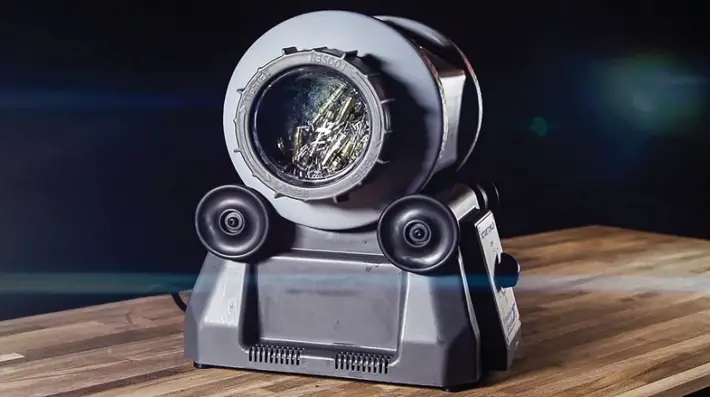
If you’re looking for the best brass tumbler for reloading, this comprehensive guide covers the top 10 options available today. We’ve also covered the best case trimmer for reloading and the best case prep center for reloading in separate guides.
Are you looking to clean and polish your spent brass for reloading? A quality brass tumbler is essential equipment for any serious reloader—it removes carbon fouling, oxidation, and old lubricant to ensure reliable chambering and consistent performance.
Reloading your own ammunition saves money (often 50% or more per round) and allows you to customize loads for your specific firearms. Before you can resize and reload brass, proper cleaning is critical for die longevity and ammunition safety.
Best Brass Tumblers Overview
Before reloading, cleaning and polishing your brass casings is essential. Tarnished brass can cause feeding issues and accelerate die wear. Dirty primer pockets may also affect ignition consistency.
Brass tumblers clean large batches of cases efficiently—often 350-1,000 pieces per cycle depending on caliber and capacity. They’re straightforward to operate and produce professional-looking results while protecting your expensive reloading dies from debris buildup.
Advantages of Brass Tumbling
- Removes carbon, oxidation, and old lubricant that can scratch sizing dies
- Cleans 350-1,000+ cases per batch depending on tumbler capacity
- Wet tumbling with stainless steel pins cleans primer pockets and case interiors
- Polished brass feeds more reliably and aids visual case inspection
- Extends die life by removing abrasive contaminants before sizing
Disadvantages to Consider
- Vibratory tumblers generate fine dust (potential lead exposure concern)
- Wet tumbling requires drying time (typically 2-4 hours with a dehydrator)
- Stainless steel pins can occasionally get stuck in flash holes on smaller calibers
- Quality rotary tumblers cost $150-250; budget vibratory units start around $50-75
- Noise levels range from 65-80 dB depending on type and model
Who Should NOT Buy a Brass Tumbler
- Reloaders processing fewer than 100 cases per month (ultrasonic cleaners may suffice)
- Those without adequate ventilation for dry tumbling operations
- Apartment dwellers concerned about noise (even “quiet” tumblers run 65-75 dB)
Best Brass Tumblers for Reloading Comparison Table
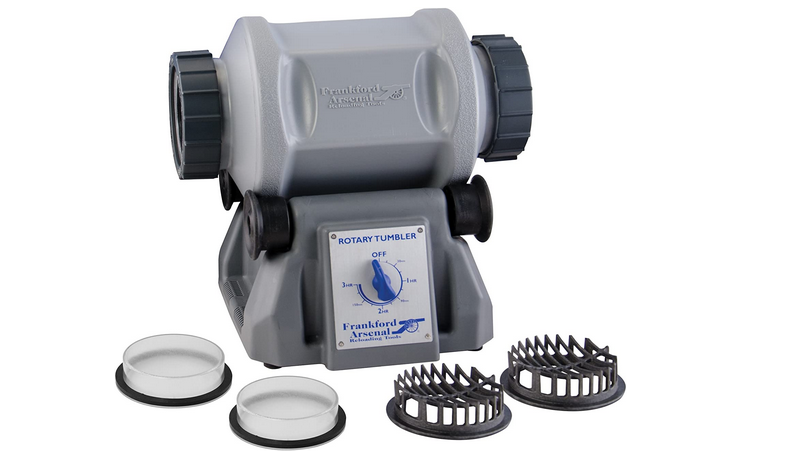 |
1 Frankford Arsenal Platinum Series Rotary Case Tumbler
|
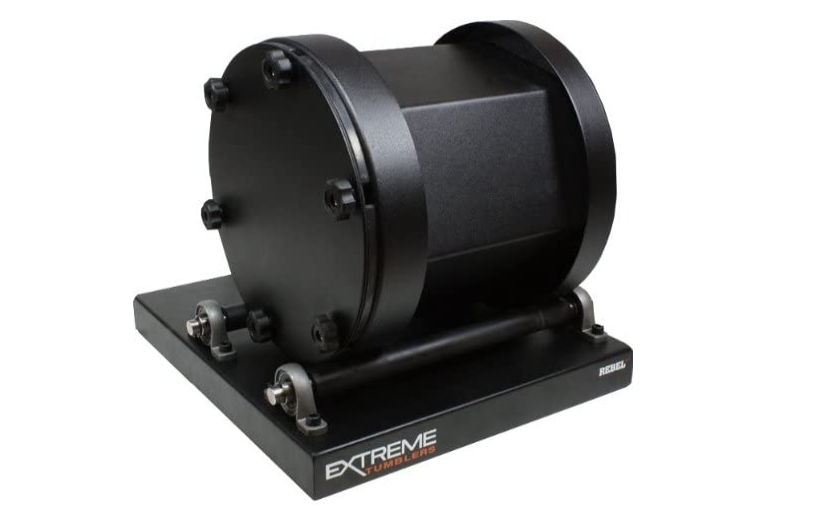 |
2 Extreme Tumblers Rebel 17 Ammo Reloading Tumbler
|
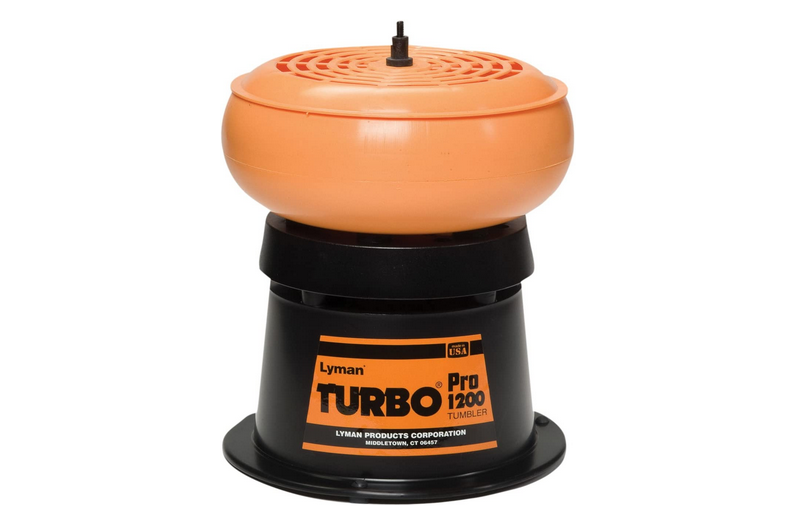 |
3 Lyman Pro 1200 Tumbler
|
 |
4 Frankford Arsenal Quick-N-EZ
|
 |
5 Lyman Cyclone Rotary Tumbler
|
 |
6 Hornady M-1 Case Tumbler
|
 |
7 Hornady 050220 Rotary Brass Tumbler
|
 |
8 Tru-square Heavy Duty Rotary Tumbler
|
 |
9 Dillon CV-750 Case Cleaner
|
 |
10 Lyman Pro Magnum Tumbler
|
Best Brass Tumbler for Reloading Reviews
Selecting the right tumbler depends on your volume, budget, and whether you prefer wet or dry tumbling. Below are detailed reviews of the top 10 brass tumblers based on verified user feedback and technical specifications.
1. Frankford Arsenal Platinum Series Rotary Case Tumbler


The Frankford Arsenal Platinum Series Rotary Case Tumbler consistently ranks as the top choice among reloaders. The 7-liter drum holds up to 1,000 .223 cases (though experienced users recommend keeping loads around 700 cases when accounting for water and media weight).
According to forum users on Brian Enos’s Forums, this tumbler produces exceptional results: “After wet tumbling with the Frankford Rotary Tumbler I could never go back to dry tumbling—brass always comes out looking like new.” The maintenance-free belt-less drive train eliminates a common failure point found in competitors.
The molded rubber drum lining reduces noise to approximately 71 dB—quieter than many competitors. The built-in 0-3 hour timer with auto-shutoff is convenient, though some users report it occasionally sticks near zero. A simple workaround is setting a phone timer as backup.
The kit includes 5 lbs of 304 stainless steel media and a sample of Frankford Arsenal Brass Cleaning Solution. For best results, users on Sniper’s Hide recommend using Dawn dish soap with Lemi-Shine citric acid additive.
Pros
- Largest capacity (1,000 .223 cases) among dedicated reloading tumblers
- Belt-free design eliminates common maintenance issues
- Dual-opening drum allows easy rinsing—run water through from one end to the other
- Relatively quiet operation at ~71 dB (compared to 73+ dB for competitors)
- See-through plastic lids for monitoring progress
Cons
- Timer occasionally sticks near zero and doesn’t auto-shutoff (user-reported issue)
- Lid seals require tightening on both sides before each use or leaking occurs
- Some primer pockets may retain residue despite stainless steel pin cleaning
2. Extreme Tumblers Rebel 17 Ammo Reloading Tumbler

The Extreme Tumblers Rebel 17 is a heavy-duty rotary tumbler built for high-volume reloaders. With a 17 lb capacity (approximately 700 .223 cases), it’s constructed like industrial equipment—fully welded steel frame with sealed ball bearings, 1/2″ shafts, and a steel drum with bolted lid.
According to discussions on Sniper’s Hide, the Rebel 17 represents a significant upgrade over the popular Thumler’s Tumbler: “Compared to the original Thumbler’s, this is on a whole other level—everything is heavy duty.” Users doing cowboy action shooting report processing thousands of cases without issues.
The 3,000 RPM motor spins faster than competitors, reducing cleaning time. Warranty coverage is comprehensive: 5 years on the barrel and liner, 3 years on the unit, and 1 year on the motor. However, users report the belt and motor design leaves room for improvement compared to belt-free alternatives.
Pros
- Industrial-grade construction with fully welded frame and sealed bearings
- 17 lb capacity handles large batches efficiently
- Excellent warranty coverage (5 years barrel, 3 years unit, 1 year motor)
- Steel drum more durable than plastic alternatives
Cons
- Lid seal issues reported—some users experience leaking even after tightening
- Higher price point than Frankford Arsenal with similar capacity
- Basic inline switch (like a desk lamp) rather than integrated toggle
- Pulley alignment critical—improper setup causes starting problems
3. Lyman Pro 1200 Tumbler

The Lyman Pro 1200 Tumbler is the best-selling vibratory tumbler and an excellent entry point for new reloaders. The 2 lb media capacity cleans up to 350 .38 Special cases per batch in 1.5-2 hours.
The legendary durability of this unit is well-documented. One user on National Gun Forum reported: “I bought my first Lyman tumbler in the early 1980s—it only lasted 25+ years of fairly heavy use.” Another user still runs their 1985 unit: “Works perfect, just like it always has.”
The built-in sifter lid is a standout feature—it eliminates the need for a separate media separator. Simply dump the contents through the lid and the brass separates from media. The thermal-protected motor prevents overheating during extended sessions. The unit works with both corncob and walnut shell media—use corncob for polishing lightly tarnished brass and walnut for heavily fouled cases.
Pros
- Exceptional durability—units commonly last 20-30+ years
- Built-in sifter lid eliminates need for separate media separator
- Affordable price point (under $75) ideal for beginners
- Thermal-protected motor prevents overheating
- Compatible with both corncob and walnut media
Cons
- Sifter lid allows dust to escape—some users prefer homemade separators
- Older models lacked on/off switch (newer versions have addressed this)
- Smaller capacity than rotary alternatives (350 .38 Spl vs 1,000 .223)
- Does not clean primer pockets or case interiors (dry tumbling limitation)
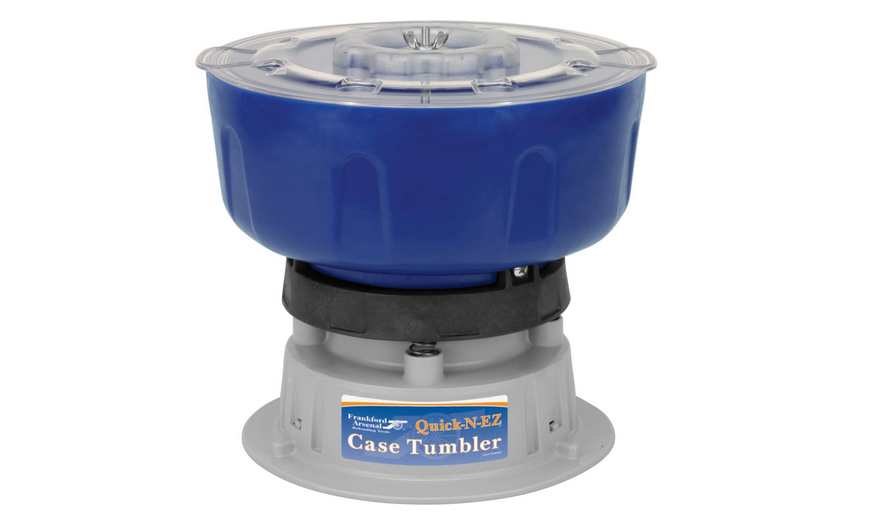
4. Frankford Arsenal Quick-N-EZ

The Frankford Arsenal Quick-N-EZ kit is described as “a fan favorite for many gunsmiths and reloading enthusiasts” according to Gun University. At under $60, it’s the most affordable complete tumbling solution available.
The kit includes everything needed to start: the tumbler unit, 3 lbs of corn cob media, a plastic bucket for separation, and 4 oz of Frankford Arsenal brass polish. Capacity is respectable—600 9mm cases or 350 .223 cases per batch. The vibratory action works with both walnut and corncob media for removing lube, oxidation, and carbon fouling.
This is an excellent starter tumbler if you’re new to reloading. However, serious reloaders often outgrow it within a year and upgrade to a rotary tumbler for better primer pocket cleaning.
Pros
- Most affordable complete kit on the market (under $60)
- Includes media, polish, and separation bucket
- Good capacity for beginner/intermediate reloaders (600 9mm cases)
- Simple operation—add media, brass, and turn on
Cons
- Plastic construction less durable than Lyman alternatives
- No timer—must manually monitor and shut off
- Does not clean primer pockets or case interiors
- Most reloaders eventually upgrade to wet tumbling for better results
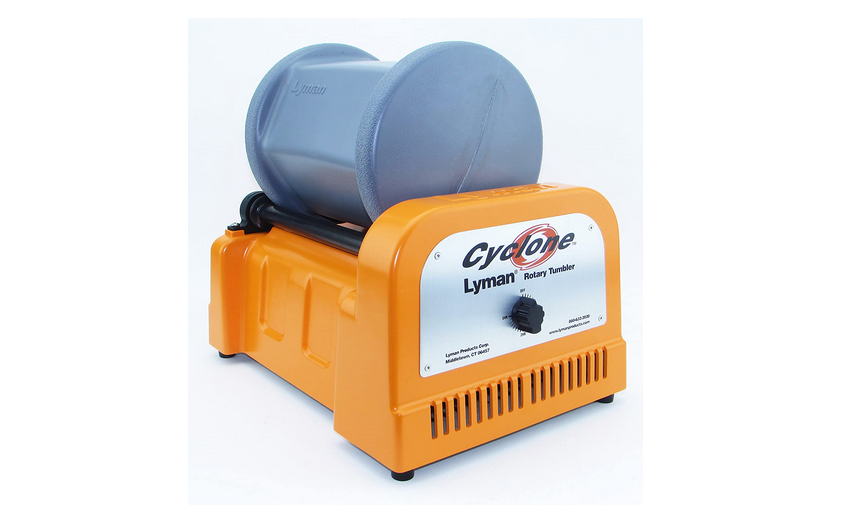
5. Lyman Cyclone Rotary Tumbler

The Lyman Cyclone Rotary Tumbler is Lyman’s answer to the Frankford Arsenal Platinum—and the competition is fierce. According to Accurate Shooter forum users: “There’s a budding rivalry between the Lyman Cyclone vs Frankford Arsenal.”
The Cyclone’s key advantage is value: it includes stainless steel media, cleaning solution, AND a media separator in the box—accessories that cost $50+ extra with the Frankford Arsenal. One user on Accurate Shooter noted: “I’ve had my Lyman Cyclone for about a year and a half—no issues, no complaints, and it runs as well as the day I bought it.”
The 1,000 .223 case capacity matches the Frankford Arsenal. The 3-hour timer and 3,000 RPM motor are comparable specifications. Noise level measures approximately 73 dB—slightly louder than the Frankford’s 71 dB.
Important Note: The Cyclone comes with 0.041″ diameter pins. Users on AR15.com report these may jam in flash holes on some calibers. Consider purchasing 0.047″ pins separately if you reload small-caliber rifle cartridges.
Pros
- Best value—includes steel media, cleaning solution, AND media separator
- Matches Frankford Arsenal capacity (1,000 .223 cases)
- Excellent reliability—users report years of trouble-free operation
- 3-hour timer with auto-shutoff
Cons
- Slightly louder than Frankford Arsenal (73 dB vs 71 dB)
- Included 0.041″ pins may jam in flash holes—0.047″ pins recommended
- More expensive than Frankford Arsenal when purchased at full MSRP
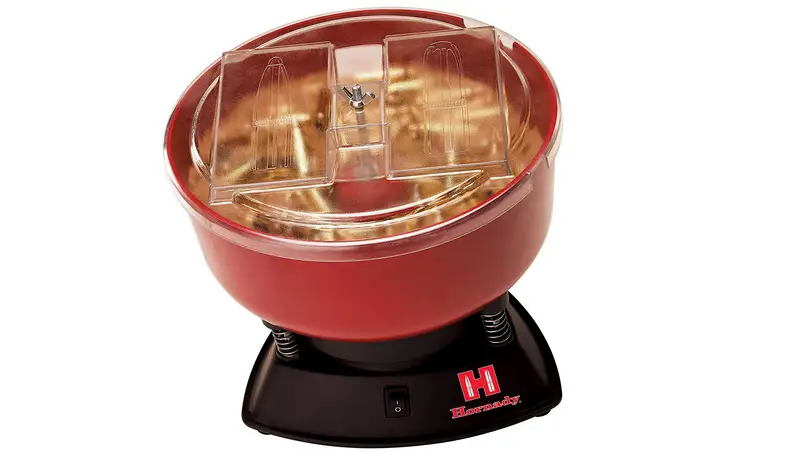
6. Hornady M-1 Case Tumbler

The Hornady M-1 Case Tumbler is Hornady’s vibratory offering, featuring a sealed ball-bearing motor and adjustable timer. Capacity is solid—up to 400 .38 Special cases, 180 30-06 cases, or equivalent volumes of other calibers.
The cyclonic and vibratory dual-action works with Hornady Tumbling Media to clean large quantities efficiently. The built-in sifter separates polished brass from media quickly. The adjustable timer lets you customize run time based on brass condition.
This tumbler represents a good middle ground between budget options like the Frankford Quick-N-EZ and premium rotary tumblers. It’s well-suited for reloaders doing primarily pistol cartridges who don’t need wet tumbling’s deep cleaning capability.
Pros
- Sealed ball-bearing motor for durability
- Adjustable timer for customized cleaning cycles
- Built-in sifter for easy brass/media separation
- Good mid-range capacity (400 .38 Special cases)
Cons
- Does not clean primer pockets (vibratory tumbler limitation)
- Higher price than Lyman Pro 1200 with similar capacity
- Media not included—additional purchase required
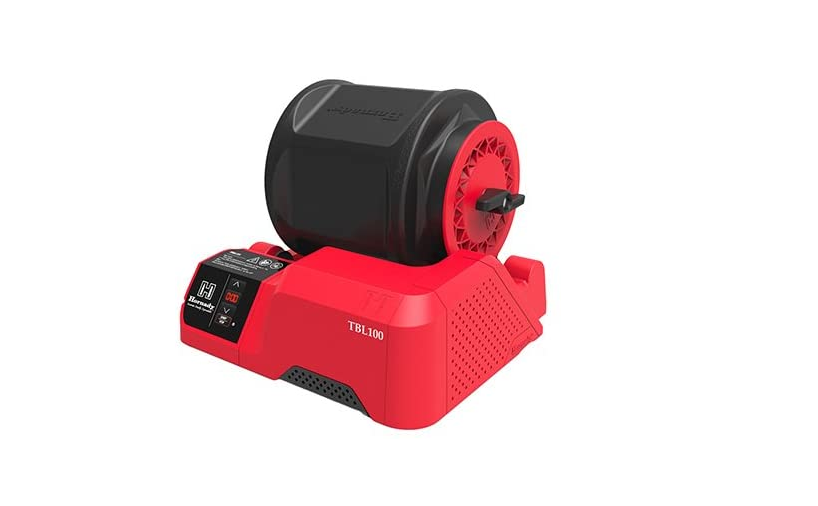
7. Hornady 050220 Rotary Brass Tumbler

The Hornady 050220 Rotary Brass Tumbler features a 6-liter rubber-lined drum, digital timer (up to 8 hours in 30-minute increments), and fan-cooled motor. The 5 lb brass capacity is smaller than the Frankford Arsenal and Lyman Cyclone.
The digital timer is a standout feature—more precise than the mechanical timers on competing units. The quick-seal compression lid and included steel pin media make setup straightforward. Hornady recommends using their One Shot Cartridge Case Solution for best results.
Important Warning: Multiple users on Optics Planet and Sniper’s Hide report significant overheating issues. One verified buyer stated: “The timer function is negated by overheating that shuts down the system after about 30 minutes of running with a less than full load of brass. The area over the motor gets so hot that it seems like a potential fire hazard.” Another user reported their motor “burned up after just 1 hour of use” with a partially loaded drum.
Pros
- Digital timer with 8-hour capacity in 30-minute increments
- Rubber-lined drum for quiet operation
- Fan-cooled motor design
- Quick-seal compression lid
Cons
- Multiple reports of overheating and motor failure with partial loads
- Smaller capacity (5 lbs) than Frankford Arsenal or Lyman alternatives
- Some users report motors failing within 3-6 months of purchase
- Higher price point for smaller capacity
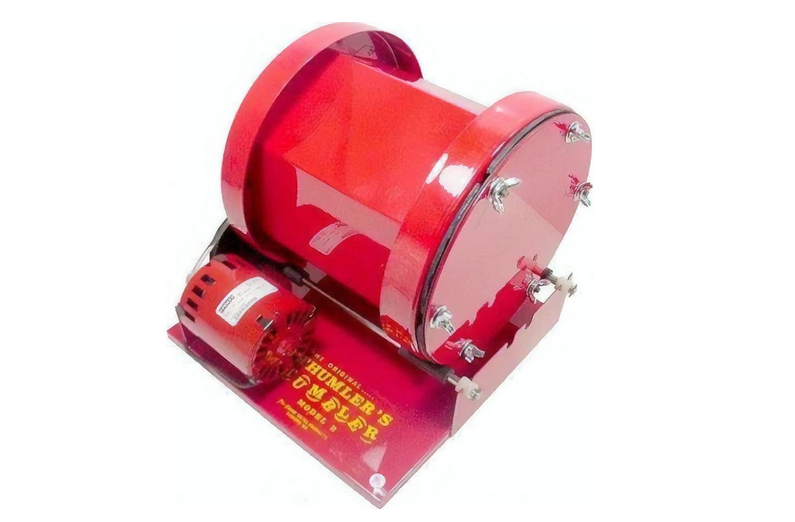
8. Tru-square Heavy Duty Rotary Tumbler
The Tru-square Heavy Duty Rotary Tumbler stands apart from dedicated reloading tumblers—it’s an industrial-grade unit with a steel drum and 15 lb capacity (approximately 500+ .223 cases). The heavy-gauge steel construction outlasts plastic alternatives, though it comes at a premium price.
The 115V motor provides consistent power for extended cleaning sessions. This tumbler excels for high-volume reloaders who process thousands of cases monthly. The steel drum construction also makes it suitable for wet or dry tumbling.
However, this unit is designed for general industrial tumbling—polishing jewelry, rocks, and metal parts—not specifically for brass reloading. It lacks features like timers and rubber lining found on dedicated reloading tumblers.
Pros
- Industrial-grade steel construction for maximum durability
- 15 lb capacity—largest on this list
- Suitable for wet or dry tumbling
- 115V motor for consistent power
Cons
- No timer—requires manual monitoring
- Steel drum is louder than rubber-lined alternatives
- Not specifically designed for brass reloading
- Premium price point
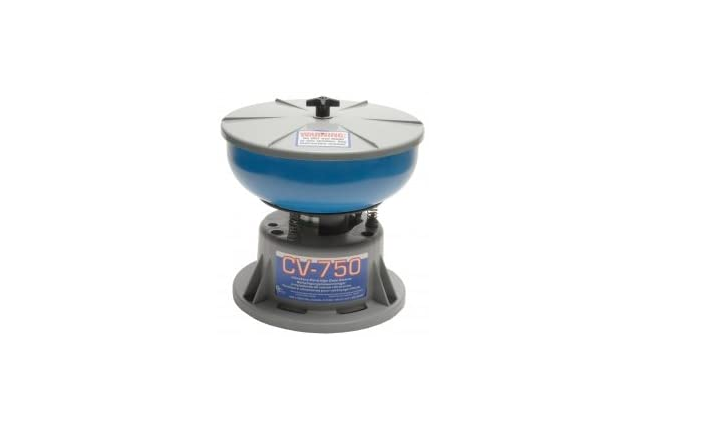
9. Dillon CV-750 Case Cleaner

The Dillon CV-750 Case Cleaner is perfect for reloaders with limited bench space. The compact design (12″ diameter, 12″ tall) with a 4.75 quart bowl holds up to 500 .45 ACP cases or 200 .30-06 cases—ideal for users with Dillon progressive presses.
According to Dillon Precision, verified buyers consistently praise the noise level: “The noise difference is amazing—I can run this Dillon while I’m working and it’s just a nice drone compared to others.” Another noted: “Much quieter than my previous vibratory cleaner and faster.”
Dillon backs this unit with a 5-year warranty on all electrical components. The company recommends using their Rapid Polish 290 (ammonia-free) with walnut media for best results—avoid ammonia-based cleaners that can weaken brass over time.
Important: This unit is dry media only. Using water or wet media voids the warranty.
Pros
- Compact footprint ideal for limited bench space (12″ x 12″)
- Quieter operation than most vibratory competitors
- 5-year warranty on electrical components (Dillon’s premium support)
- Heavy-duty plastic construction
Cons
- Dry media only—wet media voids warranty
- Higher price than Lyman/Frankford vibratory alternatives
- Does not clean primer pockets or case interiors
- Media not included
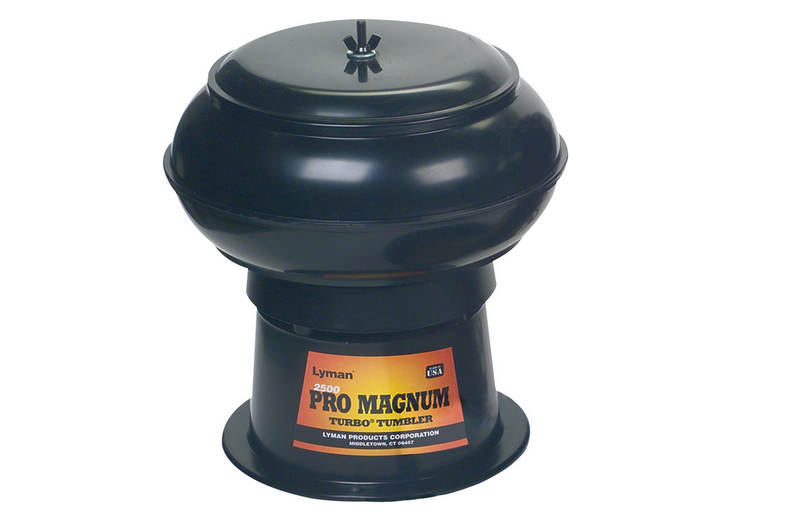
10. Lyman Pro Magnum Tumbler

The Lyman Pro Magnum Tumbler is the larger sibling to the Pro 1200, offering exceptional value with capacity for approximately 1,000 .38 Special cases—more than double the Pro 1200. The heavy-duty plastic construction includes noise-dampening design for more tolerable operation.
At around $100, the Pro Magnum delivers the largest vibratory tumbler capacity at an affordable price point. The thermal-protected motor runs reliably for extended sessions. Like other Lyman products, durability is a hallmark—these units commonly last decades with minimal maintenance.
This is our top budget recommendation for reloaders who need high-capacity dry tumbling without investing in a rotary wet tumbler.
Pros
- Best value—largest vibratory capacity at affordable price (~$100)
- Heavy-duty plastic with noise-dampening construction
- Thermal-protected motor for extended run times
- Lyman’s proven durability (20+ year lifespan common)
Cons
- No built-in timer
- Does not clean primer pockets (vibratory limitation)
- Still generates media dust (ventilation recommended)
- Larger footprint than compact alternatives
Primary Types of Brass Tumblers
Understanding the two main tumbler types helps you choose the right one for your reloading needs. Each has distinct advantages depending on your volume, budget, and cleaning requirements.
Rotary Tumbler (Wet Tumbling)
Rotary tumblers have been the preferred method for serious reloaders for decades. They work by rotating a drum containing brass, water, cleaning solution, and stainless steel pin media. According to discussions on Accurate Shooter Forum, wet tumbling offers several key advantages:
- Deep cleaning: Steel pins clean primer pockets, case interiors, and flash holes—areas dry tumbling cannot reach
- No dust: All contaminants are trapped in water, eliminating lead dust exposure concerns
- Faster cleaning: Most batches complete in 1-2 hours versus 3-4 hours for vibratory
- Media never wears out: Stainless steel pins last indefinitely
The main drawback is requiring brass to be decapped before cleaning (due to water) and dried afterward. We recommend using walnut media or corncob for light cleaning, and stainless steel pins for the deepest clean.
Vibratory Tumbler (Dry Tumbling)
Vibratory tumblers like the Lyman Pro 1200 are the most common entry point for reloaders. They use vibrations to create friction between brass cases and media (typically corncob or walnut shell), polishing the exterior.
According to The Ballistic Assistant, dry tumbling works well for light cleaning but has limitations:
- Simpler operation: Add brass and media, turn on, walk away
- Lower cost: Budget vibratory tumblers start around $50-75
- No drying required: Brass is ready to reload immediately
The tradeoffs include media dust (potential lead exposure), no primer pocket cleaning, and longer cycle times. Vibratory tumblers are best suited for once-fired brass that doesn’t require deep cleaning.
Best Media for Tumbling Brass Casings
Based on extensive user feedback from Northwest Firearms and Rock Tumbler, here are the three primary media types:
- Walnut shell media: More aggressive cleaning for heavily fouled or multi-fired brass. Removes stubborn carbon and oxidation but scratches surfaces, reducing final shine. Best for initial cleaning before a corncob polish pass.
- Corncob media: Burnishes and polishes rather than deep cleaning. Produces brilliant shine on lightly tarnished once-fired brass. Can pack primer pockets and flash holes on 12/20 grit—inspect cases before reloading.
- Stainless steel pins: The most thorough cleaning option. Cleans inside, outside, and primer pockets to factory-new appearance. Pins never wear out but require wet tumbling and drying. Some users report 3-5 pins per 100 cases getting wedged in case necks on 6.5mm calibers.
Buyer’s Guide: Choosing the Right Brass Tumbler
Selecting the best tumbler depends on your specific reloading needs. Consider these factors:
Volume and Capacity
- Low volume (under 300 cases/month): Vibratory tumbler like Lyman Pro 1200 or Frankford Arsenal Quick-N-EZ
- Medium volume (300-1,000 cases/month): Rotary tumbler like Frankford Arsenal Platinum or Lyman Cyclone
- High volume (1,000+ cases/month): Industrial-grade options like Extreme Tumblers Rebel 17 or Tru-square Heavy Duty
Budget Considerations
- Under $75: Frankford Arsenal Quick-N-EZ (best starter kit) or Lyman Pro 1200 (best durability)
- $75-150: Lyman Pro Magnum (best value for capacity) or Hornady M-1
- $150-250: Frankford Arsenal Platinum (best overall) or Lyman Cyclone (best included accessories)
- $250+: Extreme Tumblers Rebel 17 (industrial-grade durability)
Cleaning Quality Requirements
- Basic exterior polish only: Any vibratory tumbler with corncob media
- Deep cleaning including primer pockets: Rotary wet tumbler with stainless steel pins required
- Competition/precision reloading: Many precision shooters use both—wet tumble for deep cleaning, then dry tumble with corncob after sizing to remove lube and add polish
Space and Noise Constraints
- Limited bench space: Dillon CV-750 (12″ x 12″ footprint)
- Noise-sensitive environments: Frankford Arsenal Platinum (~71 dB) or Dillon CV-750 (quietest vibratory)
- Garage/basement with space: Larger rotary units like Extreme Tumblers Rebel 17
Frequently Asked Questions
What is wet tumbling?
Wet tumbling uses a watertight rotary drum containing water, brass cases, cleaning solution, and stainless steel pin media. The drum rotates on rollers, creating agitation that cleans cases inside and out—including primer pockets. The process typically takes 1-2 hours and requires drying brass afterward (2-4 hours in a food dehydrator or overnight air drying).
How long should you tumble brass?
- Vibratory (dry): 2-4 hours for lightly tarnished brass, up to 6+ hours for heavily fouled cases
- Rotary (wet): 1-2 hours for most brass, 2-3 hours for heavily corroded cases
Avoid over-tumbling—extended wet tumbling sessions can cause “peening” on case necks. If brass isn’t clean after 3 hours of wet tumbling, the media or solution may need replacing.
Should I decap before or after tumbling?
- Wet tumbling: Decap before cleaning. Water needs to drain from primer pockets, and pins clean primer pockets better without spent primers installed.
- Dry tumbling: Either works. Some reloaders tumble with primers in to prevent media packing flash holes. Others decap first to avoid potential contamination of reloading dies.
How do I reduce tumbler noise?
According to forum discussions, effective noise reduction methods include:
- Place tumbler on a rubber mat or thick carpet remnant
- Use a 5-gallon bucket with insulation as an enclosure
- Run tumbler in garage, basement, or utility room away from living spaces
- Rubber-lined drums (Frankford Arsenal, Hornady) are inherently quieter than bare metal
What cleaning solution works best for wet tumbling?
The most common recommendation from Brian Enos Forums users: “Dawn dish soap with Lemi-Shine citric acid additive produces excellent results.” Use approximately 1 tablespoon of Dawn and 1/2 teaspoon of citric acid per gallon of water.
Final Recommendation
Choosing the right brass tumbler depends on your reloading volume, budget, and cleaning requirements.
For most reloaders: The Frankford Arsenal Platinum Series Rotary Tumbler offers the best combination of capacity (1,000 .223 cases), reliability, and value. The belt-free design eliminates a common failure point, and users consistently report excellent cleaning results.
For budget-conscious beginners: The Lyman Pro Magnum Tumbler provides exceptional value with proven durability. While dry tumbling doesn’t clean primer pockets, it’s sufficient for light-use brass and costs under $100.
For best included value: The Lyman Cyclone includes steel media, cleaning solution, AND a separator—accessories that add $50+ to the Frankford Arsenal’s total cost.