
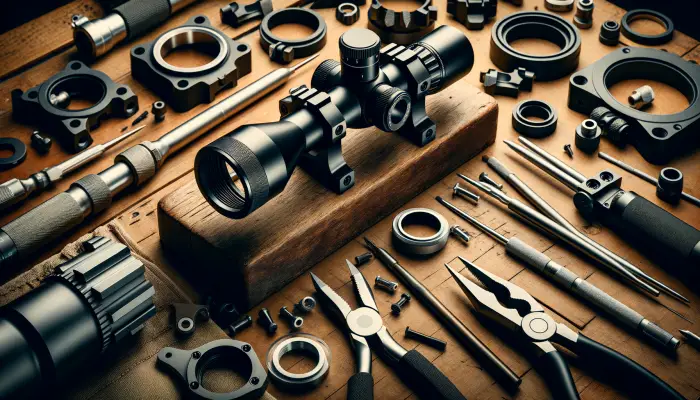
Mounting your scope properly is just as important as choosing the right optic. Quality rings, bases, and accessories ensure your scope holds zero, survives recoil, and performs reliably for years. Understanding mounting hardware saves frustration and prevents costly mistakes.
This guide covers scope rings, mounts, leveling tools, and the accessories that keep your optics performing.
Table of Contents
- Scope Rings Explained
- Mount Types and Bases
- Installation Essentials
- Maintenance Tools
- Detailed Accessory Guides
Scope Rings Explained
Ring Diameter
Scope tube diameter determines ring size. Common sizes include:
- 1 inch (25.4mm): Traditional American standard, still common on hunting scopes
- 30mm: Most popular modern choice, offering thicker tube walls for durability
- 34mm: Premium tactical and long-range scopes, maximum adjustment range
- 35mm: Emerging European standard on some brands
Ring Height
Rings must be tall enough to clear your objective lens above the barrel or rail. Larger objective lenses require taller rings. Too tall wastes cheek weld; too short means the scope touches the barrel. Measure carefully before ordering.
Ring Materials
Aluminum: Lightweight and adequate for most hunting applications. 7075-T6 aluminum offers excellent strength.
Steel: Maximum durability for heavy recoil and tactical use. Significantly heavier than aluminum.
Mount Types and Bases
Two-Piece Rings
Traditional setup with separate front and rear rings on a rifle base. Allows precise positioning and spacing adjustment. Popular on bolt-action hunting rifles.
One-Piece Mounts
Single rigid unit holding both ring positions. Maintains better alignment than two-piece systems. Preferred for precision and tactical applications.
Cantilever Mounts
Offset design positioning the scope forward for proper eye relief on AR-15 and similar platforms. Essential when rear-mounted optics would sit too far back.
Quick-Detach (QD) Mounts
Lever systems allowing rapid scope removal and return to zero. Useful for cleaning, transport, or switching between iron sights and optics.
Installation Essentials
Torque Wrenches
Over-torqued screws crush scope tubes, causing tracking problems. Under-torqued screws allow movement and zero loss. A calibrated torque wrench ensures consistent, correct tightness. Most manufacturers specify 15-25 inch-pounds for ring screws.
Scope Levels
Canted scopes cause point-of-impact shift at distance. A scope level mounted to the scope or rail enables precise alignment. Critical for long-range shooting where small angles compound over distance.
Lapping Tools
Lapping creates perfectly concentric ring surfaces, distributing clamping force evenly around the scope tube. Recommended for precision applications and when using steel rings.
Maintenance Tools
Borescopes
Camera systems that inspect barrel condition. Essential for diagnosing accuracy problems, monitoring throat erosion, and verifying cleaning effectiveness. Quality units show every detail of rifling condition.
Gun Vises
Stable platforms for mounting, cleaning, and maintenance. A quality vise makes scope installation easier and safer. Padded contacts protect finishes while providing secure hold.
Scope Covers
Flip-up and stretch covers protect lenses from rain, dust, and impact. Good covers open instantly for immediate use while staying securely closed during transport.
Detailed Accessory Guides
Explore our scope accessory reviews:
Rings and Mounts
- Vortex 34mm Scope Rings Review
- Vortex Tactical 30mm Rings Review
- Vortex Cantilever Scope Mount Review
- Nightforce X-Treme Duty Rings Review
Installation Tools
- Top 12+ Best Torque Wrenches for Scope Mounting
- Top 5+ Best Scope Leveling Kits
- Top 10+ Best Gun Vises
Maintenance and Protection
- Top 5 Best Rifle Borescopes
- Vortex Defender Scope Caps Review
- Best Scope Covers for Vortex Viper PST
- CTK Precision P3 Ultimate Gun Vise Review
Best Practices
Always use proper thread locker on mounting screws – removable (blue) Loctite prevents loosening while allowing future adjustments. Check ring screws after the first range session and periodically thereafter. Replace any screws showing stripped threads or wear.
When mounting, ensure the scope has adequate eye relief for your shooting position. Position the reticle perfectly level before final torque. Double-check all clearances before firing.
Recommended Products
Ready to buy? Here are our top picks: