
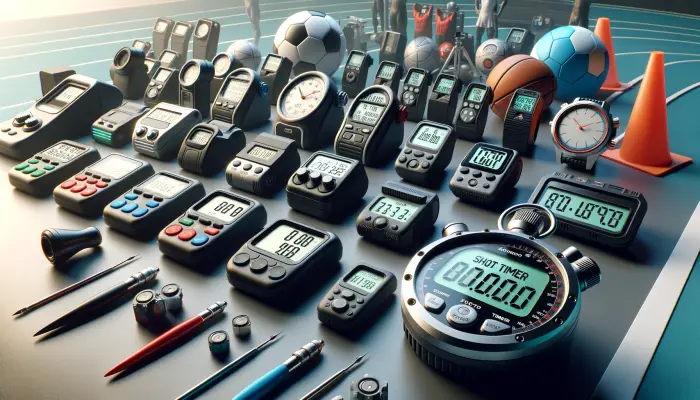
Shot timers are essential training tools for competitive shooters and serious practitioners looking to measure and improve their performance. Whether you’re competing in USPSA, IDPA, 3-Gun, or simply want to track your draw and split times, a quality shot timer provides objective feedback that drives improvement.
This guide covers everything from basic timer features to advanced training applications, helping you select the right timer for your needs and budget.
Table of Contents
- Why Use a Shot Timer?
- Types of Shot Timers
- Key Features to Consider
- Competition-Grade Timers
- Training and Practice Timers
- Shot Timer Apps
- Training Drills with Timers
Why Use a Shot Timer?
Objective Measurement
Human perception of speed is unreliable. A shot timer provides precise, objective measurement of draw times, split times (time between shots), and total stage times. You can’t improve what you can’t measure—timers enable data-driven training.
Competition Preparation
Competitive shooting sports use shot timers for stage timing and hit factor calculation. Training with the same equipment used in matches prepares you for competition pressure. Understanding your capabilities under time pressure helps with match strategy.
Tracking Progress
Regular timed practice creates baseline measurements. Record your times to track improvement over weeks and months. Identify weaknesses—slow draws, splits, or transitions—through consistent measurement. Data reveals what “feeling fast” actually produces in measurable results.
Types of Shot Timers
Dedicated Hardware Timers
Purpose-built shot timers remain the gold standard. They offer reliable microphones optimized for gunfire detection, rugged construction for range conditions, and features designed specifically for shooting sports. CED7000, Competition Electronics Pocket Pro, and PACT Club Timer represent this category.
Smartphone Apps
Shot timer apps convert smartphones into basic timers. They’re convenient and inexpensive but limited by phone microphone quality and processing. Apps work for basic practice but struggle with outdoor shooting, suppressed firearms, and multiple shooters. Consider apps as supplements to, not replacements for, dedicated timers.
Chronograph-Timer Combos
Some chronographs include shot timer functionality. If you need both velocity measurement and timing, combination units save money and bag space. Standalone timers typically offer better timing features than combo units.
Key Features to Consider
Sensitivity Adjustment
Adjustable microphone sensitivity accommodates different environments and firearms. Indoor ranges reflect sound differently than outdoor ranges. Suppressed firearms produce less sound. Adjustable sensitivity ensures reliable shot detection across conditions.
Par Time Function
Par time beeps at a preset interval after the start signal, indicating when you should complete a drill. Par times enable specific skill development—setting increasingly challenging targets as skills improve. Essential for structured training progression.
Review Functions
Quality timers store shot strings for review. Review each shot’s time, calculate splits, and identify where you lost time. Some timers offer statistical analysis across multiple strings. Review capability transforms timers from stopwatches into training tools.
Random Start Delay
Random delays between pressing start and the beep prevent anticipation. Anticipating the start signal doesn’t prepare you for match conditions where start signals are unpredictable. Random delays train honest reaction times.
Shot Detection
Reliable shot detection across all firearms and conditions matters more than features. Test timers with your specific firearms and typical range conditions. Some timers struggle with .22 LR, suppressors, or busy range environments.
Competition-Grade Timers
CED7000
The Competition Electronics Digital 7000 represents the standard for competition timing. Programmable par times, extensive review functions, and proven reliability make it the choice for serious competitors. Higher price point justified by professional-grade features and durability.
Competition Electronics Pocket Pro II
The Pocket Pro II offers competition-grade timing in a compact, affordable package. Less feature-rich than the CED7000 but handles fundamental timing excellently. Popular for both competition and training use. Excellent value for most shooters.
PACT Club Timer III
PACT’s Club Timer III provides reliable timing with straightforward operation. Known for durability and consistent shot detection. The interface is more basic than CED products but core timing functionality is excellent. Good choice for club use and personal training.
Training and Practice Timers
Budget Options
Entry-level timers like the PACT Club Timer and basic Pocket Pro models provide essential timing functionality at lower prices. They lack advanced features but handle basic draw time and split measurement adequately. Start here if uncertain about commitment to timed training.
Feature Considerations
Training-focused shooters benefit from par time functions for drill work and review functions for analysis. Bluetooth connectivity in some modern timers allows smartphone logging and analysis. Consider how you’ll use the timer—basic timing needs basic features; structured training benefits from advanced capabilities.
Shot Timer Apps
Advantages
Shot timer apps are free or inexpensive, always available (your phone is always with you), and increasingly sophisticated. Modern apps include par times, string review, and statistics. For dry fire practice and basic live fire timing, apps provide excellent value.
Limitations
Phone microphones weren’t designed for gunfire detection. Apps struggle with suppressed firearms, outdoor environments with wind noise, and multiple shooters. Battery drain during long sessions is common. Phone placement affects detection reliability. Apps supplement rather than replace dedicated timers for serious training.
Best App Options
IPSC Shot Timer and similar apps offer reasonable functionality for smartphone platforms. Test apps with your specific firearms before relying on them for training. Some apps perform surprisingly well; others are essentially unusable. Trial periods help identify which work for your situation.
Training Drills with Timers
Draw and First Shot
Measure your concealment draw to first shot and open carry draw to first shot. Record baseline times and work to improve. Par times set goals: if your current draw is 1.8 seconds, set par at 1.6 seconds and train until you consistently beat it.
Bill Drill
The Bill Drill—six shots on a single target as fast as acceptable hits allow—measures split times and recoil control. Par time variations increase difficulty. Recording and reviewing splits identifies where time is lost.
Transitions
Set targets at varying distances and angles. Time transitions between targets to identify weaknesses. Smooth transitions often gain more time than faster splits. Timer data reveals whether you’re genuinely improving or just feeling faster.
Stage Practice
Recreate competition stages for timed practice. Compare your times against par times or stage winning times. Identify which stage elements cost the most time. Focus training on weakest elements.
Shot Timer Reviews and Comparisons
Explore our detailed timer reviews:
- CED7000 Shot Timer Review
- CED 7000 vs Pocket Pro 2 Comparison
- IPSC Shot Timer App for iPhone
- PIE Shot Timer Review
- PACT Club Timer III Review
- PACT Club Timer III vs Pocket Pro II
- Shot Timer vs App Comparison
Conclusion: Invest in Your Training
A shot timer is one of the highest-value training investments a shooter can make. Objective measurement enables structured improvement that subjective practice cannot provide. Start with an entry-level timer or app to establish whether timed training suits your practice style, then upgrade to competition-grade equipment as your needs develop.
Remember that the timer is a tool—it reveals your current performance and measures improvement. Consistent, focused practice using timer feedback drives genuine skill development. The best timer is the one you actually use for regular training.