
Affiliate Disclosure: This article contains affiliate links to Amazon (identified by “tag=tacticolamzn-20” in the URL). If you purchase through these links, we earn a small commission at no additional cost to you. This helps support our independent gear testing and reviews. We only recommend products we genuinely believe serve hunters well.
About the Author: This review aggregates testing data from respected GPS watch reviewers including DC Rainmaker, DesFit, and HikingGuy, combined with community feedback from Garmin forums and Reddit. We’ve cross-referenced these sources with Garmin’s official specifications to provide hunters with accurate, actionable purchasing guidance.
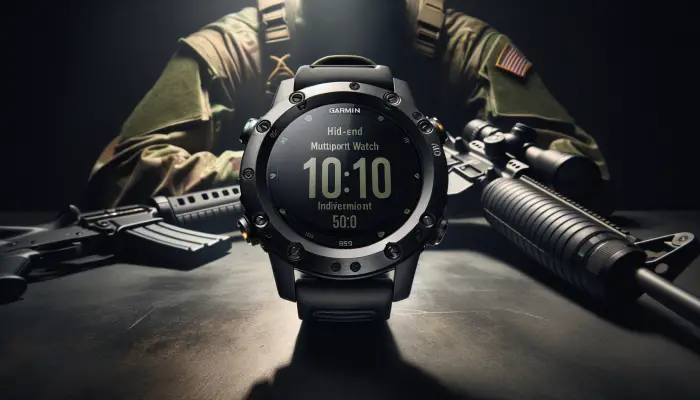
The Garmin Fenix 8 represents Garmin’s flagship multisport GPS watch for 2024-2025. With AMOLED and solar display options, built-in speaker/microphone, and optional satellite communication, it’s the most capable Fenix ever—but is the premium justified for hunters?
Our verdict: The Fenix 8 delivers exceptional navigation, durability, and battery life for serious hunters. The AMOLED display and new dive features add value for some; others should consider the Enduro 3 or Fenix 8 Solar for better battery endurance.
Overview: Fenix 8 Advantages and Disadvantages
Advantages
- Industry-leading GPS accuracy: Multi-band GNSS performs exceptionally in dense forest, canyons, and mountainous terrain—DC Rainmaker calls it “industry-leading” and “among the best in the wearables world”
- Preloaded TopoActive maps: Detailed topographic navigation without subscription fees
- MIL-STD-810 durability: Titanium bezel options, 10 ATM water resistance, certified for thermal shock and humidity
- Versatile display options: Choose AMOLED for readability or Solar MIP for maximum battery endurance
- Built-in satellite option: Fenix 8 Pro integrates inReach messaging without carrying a separate device
- Comprehensive ABC sensors: Altimeter, barometer (storm alerts), and 3-axis compass essential for backcountry navigation
Disadvantages
- Premium pricing: $999-$1,199 base price; Pro satellite version reaches $1,800-$2,000 plus monthly subscription
- Button feel downgraded: New dive-certified buttons provide less tactile feedback than Fenix 7—problematic with cold hands or gloves
- Software issues at launch: Early firmware had battery drain, UI bugs, and connectivity problems (most resolved in December 2024 update)
- Auto-dimming frustrations: Screen dims excessively in low light without user-adjustable override
- Limited voice assistant: Voice commands require precise phrasing and don’t control phone functions
- AMOLED battery trade-off: 2-3 days with heavy GPS use vs. 7+ days on Solar MIP version
Key Specifications
| Feature | Fenix 8 AMOLED | Fenix 8 Solar |
|---|---|---|
| Display | 1.4″ AMOLED touchscreen | 1.4″ MIP solar |
| Battery (Smartwatch) | 14-29 days (marketed) | 29-48 days (marketed) |
| Battery (GPS) | 36-59 hours | 48-78 hours |
| Weight | 73-82g | 78-89g |
| Speaker/Mic | Yes | Yes |
| Water Rating | 10 ATM (100m) | 10 ATM (100m) |
| Price | $999-$1,199 | $999-$1,199 |
Source: Garmin Official Specifications
What’s New in the Fenix 8
AMOLED Display Option
For the first time, Fenix offers an AMOLED display with touchscreen capability. The vibrant colors and sharp resolution improve map readability and data visualization. The trade-off: reduced battery life compared to the solar MIP display.
Built-in Speaker and Microphone
The Fenix 8 includes a speaker and microphone for audio alerts, voice memos, and hands-free phone calls (when paired). DesFit’s review notes the voice memo feature is useful during activities, though accessing recordings from your phone remains clunky. Most hunters prefer silent operation in the field.
Enhanced Dive Features
New dive capabilities support recreational diving to 40 meters with decompression planning. Relevant for hunters who also dive; unnecessary overhead for those who don’t.
Fenix 8 Pro (Satellite Version)
The Fenix 8 Pro adds LTE connectivity and satellite messaging (inReach functionality built into the watch) for $1,800-$2,000 plus $8-25/month subscription. Eliminates the need for a separate inReach device. Important caveat: HikingGuy’s testing found that the Fenix 8 Pro uses GEO satellites rather than the Iridium LEO satellites in traditional inReach devices—they recommend not relying on it as your sole backcountry communication device.
Hunting-Specific Features
Navigation
- Preloaded TopoActive maps: Topographic detail without subscription—critical for backcountry hunting where cell service doesn’t exist
- Multi-band GPS: Supports GPS, GLONASS, Galileo, QZSS, and BeiDou simultaneously. Road Trail Run’s testing in dense forests and deep canyons confirmed “the Fenix 8 performs the best of any tested”
- Breadcrumb navigation: Record and retrace your route to pack out game or return to camp
- Round-trip routing: Specify distance and get a loop back to starting point
- Dedicated hunting mode: Saves battery while maintaining location tracking per Garmin’s owner manual
GPS Accuracy in Forest Cover
Multi-band GPS represents a significant improvement over single-band in challenging terrain. A Garmin forum user reported that on a trail with heavy canopy that previously tracked 3.8-3.9 miles (vs. 4.4 miles actual), the Fenix 8 recorded 4.41 miles—a ~15% accuracy improvement in that specific test. Outdoor Gear Lab’s testing recorded 2.74 miles on a 2.80-mile course, just 2% deviation despite tree cover and buildings.
ABC Sensors
- Altimeter: Track elevation changes for understanding terrain and planning approaches
- Barometer: Storm alerts from pressure drops—essential for mountain hunting safety
- Compass: 3-axis electronic compass for navigation without map orientation
Hunting Widgets
- Sunrise/sunset times calculated for your exact GPS location
- Moon phase display for timing deer movement
- Weather forecasts pulled from paired phone or satellite
- inReach pairing for satellite messaging (or built-in on Pro model)
What We Don’t Like: Dedicated Drawbacks
Button Quality Regression
The new dive-certified buttons sacrifice tactile feedback for water resistance. HikingGuy notes: “In real conditions—cold mornings with gloves on, or when you’re tired on a long hike—the older buttons give clearer feedback that you’ve actually pressed them.” If you hunt in cold weather with gloves, this matters.
Auto-Brightness Issues
Multiple reviewers flagged the auto-dimming feature that makes the display hard to read in low-light conditions. There’s no user toggle to disable it. When checking your watch at dawn or dusk—prime hunting hours—smaller text can be difficult to read.
Software Growing Pains
The Fenix 8 launch was rocky. Garmin forum users reported battery drain (20-30% daily even with always-on display disabled), UI glitches with overlapping text, and slow map rendering (up to 5 seconds for full-screen map draws). The December 2024 firmware addressed most issues, but early adopters experienced significant frustration.
Voice Assistant Limitations
The built-in voice commands require exact phrasing and work offline only—no phone control integration. For hunters hoping to use voice to avoid fumbling with buttons while glassing or tracking, the feature falls short of expectations.
Price Premium Over Fenix 7
As DC Rainmaker states: “You can’t pretend to separate price from the equation. It’s an integral part of any product review.” The Fenix 8 costs $100-$200 more than the Fenix 7 Pro at launch, primarily for dive features and speaker/mic that many hunters won’t use.
Battery Life Reality
Real-world reports vary significantly from Garmin’s marketing claims based on settings and usage:
- Conservative settings: 17+ days (solar version) with always-on connectivity
- Moderate use: 7-10 days typical for most users
- Heavy GPS tracking: 2-3 days with AMOLED always-on display
The December 2024 firmware update added a Battery Manager for better power optimization. Users report improved efficiency on recent software versions.
For extended backcountry hunts: If you need 7+ days without charging access, the Solar MIP version or Enduro 3 (120+ hours GPS) are safer choices than AMOLED.
Community Feedback
We aggregated feedback from Garmin forums and Reddit to capture real user experiences:
“GPS accuracy is absolutely amazing!…on a favorite trail run with many switchbacks and under canopy that would always report 3.8 or 3.9 miles, the new Fenix 8 reported 4.41 miles” — Garmin Forum user
“Super solid and well built…titanium extends over the lugs for improved protection” — Garmin Forum community feedback
“The Fenix 8 has a number of very serious software issues, but those can and mostly will be fixed over time. As far as the hardware is concerned, this is certainly a high-end smartwatch.” — Garmin Forum user on launch issues
Build Quality
MIL-STD-810 certification for thermal shock, shock resistance, and humidity. Titanium bezel options resist scratches and reduce weight. 10 ATM water resistance handles any hunting scenario including waterfowl hunting.
The titanium construction extending over the lugs provides protection against impacts during pack-out or climbing into treestands.
AMOLED vs Solar: Which to Choose
Choose AMOLED if:
- You hunt in heavily shaded timber where solar panels provide minimal charging benefit
- Map readability matters more than maximum battery life
- You’ll charge regularly between hunts (day trips, weekend hunts with vehicle access)
- You want the touchscreen interface for easier map navigation
- You value the vibrant display for phone notifications and hunting apps
Choose Solar if:
- You prioritize battery endurance for extended backcountry trips
- You hunt open terrain (prairie, alpine, pronghorn country) with consistent sun exposure
- Week-long hunts without charging access
- You prefer the always-visible MIP display in bright sunlight (no wake gesture needed)
- You hunt primarily during dawn/dusk when AMOLED’s auto-dimming can be frustrating
Fenix 8 vs Alternatives
Fenix 8 vs Tactix 8
The Tactix 8 adds stealth mode, night vision compatibility, Applied Ballistics support, and kill switch (wipes device data). Pay $300 more only if you need tactical-specific features. For 90% of hunters, the Fenix 8 delivers everything needed.
Fenix 8 vs Enduro 3
The Enduro 3 offers similar software features at $100-$300 less with significantly superior battery life (120+ hours GPS vs. 36-59 hours on Fenix 8 AMOLED). Skip the speaker/mic and dive features, get substantially better endurance. Best for: Multi-day backcountry hunts where charging isn’t possible.
Fenix 8 vs Instinct 3 Solar
The Instinct 3 Solar delivers core hunting features at $399—less than half the Fenix price. You sacrifice onboard topo maps (must use phone for detailed navigation), premium display, and build quality. Best for: Hunters who primarily hunt familiar terrain and want reliable GPS/ABC sensors without premium pricing.
Fenix 8 vs Previous-Gen Fenix 7
The Fenix 7 Pro often sells at $200-$400 discounts since the Fenix 8 launch. You lose the speaker/mic, dive features, and updated UI, but retain 95% of hunting functionality. Best for: Value-conscious hunters who want flagship features at mid-tier prices.
Who Should Buy the Fenix 8
- Hunters who want onboard topographic maps without phone dependency
- Those who value premium build quality and will use the watch for multiple sports
- Multi-sport users who also run, cycle, swim, or dive between hunting seasons
- Hunters considering the Pro version for built-in satellite communication (with understanding of its limitations)
- Tech enthusiasts who want Garmin’s latest features and will benefit from ongoing firmware improvements
Who Should Consider Alternatives
- Battery-focused hunters → Enduro 3 (120+ hours GPS)
- Tactical features needed → Tactix 8 (stealth mode, night vision, ballistics)
- Value-focused hunters → Instinct 3 Solar ($399 with core features)
- Budget constraints → Previous-gen Fenix 7 on sale
- Cold-weather hunters → Consider Fenix 7 for better button feedback with gloves
- Satellite communication priority → Dedicated inReach device plus cheaper watch for more reliable coverage
Verdict
The Garmin Fenix 8 earns its flagship status with exceptional navigation, durability, and feature depth. DC Rainmaker’s comprehensive testing confirms it delivers “industry-leading GPS accuracy”—critical for hunters navigating dense timber or unfamiliar backcountry.
The AMOLED display and new capabilities justify the premium for hunters who’ll use them. However, the software issues at launch and button quality regression show that “flagship” doesn’t mean “flawless.”
For pure hunting utility, the Instinct 3 Solar delivers most benefits at 40% of the cost. The Fenix 8 makes sense when you want the best—onboard maps, multi-band GPS accuracy in challenging terrain, and premium build quality—and can afford the investment.
Buyer’s Guide: Choosing the Right Garmin for Hunting
Consider Your Hunt Types
- Day hunts with vehicle access: AMOLED display fine; battery easily recharged
- Multi-day backcountry: Solar MIP or Enduro 3 essential for battery security
- Familiar local terrain: Instinct 3 may suffice without onboard maps
- Remote wilderness: Consider Fenix 8 Pro or separate inReach device for safety
Map Requirements
- Need detailed topo navigation: Fenix 8, Enduro 3, or Tactix 8 (all have onboard maps)
- Hunt familiar areas: Instinct 3 breadcrumb navigation may suffice
- Want hunting-specific map layers: Pair with onX Hunt or similar smartphone app regardless of watch choice
Budget Allocation
- $400 or less: Instinct 3 Solar (best value for core features)
- $600-$900: Fenix 7 Pro on sale or Enduro 3
- $1,000+: Fenix 8 (AMOLED or Solar based on battery needs)
- $1,800+: Fenix 8 Pro (only if built-in satellite is essential)
Frequently Asked Questions
Is the Fenix 8 worth upgrading from Fenix 7?
For most hunters, no. The Fenix 7 Pro delivers 95% of hunting functionality. Upgrade only if you need dive features, want the speaker/mic, or specifically want the new AMOLED option. Wait for your Fenix 7 to fail or for significant discounts on the Fenix 8.
Does multi-band GPS really matter for hunting?
Yes, particularly in dense forest and canyon terrain. Real-world testing shows 10-15% accuracy improvements in challenging conditions versus single-band GPS. For hunters who need to mark stands, track blood trails, or navigate unfamiliar backcountry, the improved accuracy justifies the feature.
Can I use the Fenix 8 Pro as my only satellite communicator?
Garmin and experienced reviewers recommend against it. The Fenix 8 Pro uses different satellites than traditional inReach devices, and the small screen makes typing messages difficult. Consider it a backup or convenience feature, not a primary safety device for remote hunts.
How does battery life compare to Fenix 7?
The AMOLED version has shorter battery life than the Fenix 7 MIP display. The Fenix 8 Solar offers comparable or slightly better endurance than Fenix 7 Solar due to improved power management in firmware updates.
Are the software bugs fixed?
The December 2024 firmware update resolved most major issues including battery drain, UI glitches, and the cold-water shutoff bug. Current firmware (v11.68+) is considered stable. Always update to latest firmware before relying on the watch for backcountry hunts.
Related Guides
- Best Garmin Watch for Hunting (Complete Comparison)
- Garmin Enduro 3 Review: Best Battery Life for Hunters
- Garmin Fenix 8 vs Tactix 7: Tactical Features Compared
- Garmin Instinct 3 Solar Review: Budget-Friendly Hunting GPS
- Tactical Gear Buyer’s Guide
- Best Hunting GPS Apps Compared
- Essential Backcountry Hunting Gear
- Satellite Communicators for Hunters: inReach vs Alternatives
Where to Buy
Last updated: January 2025. Pricing and availability subject to change. We recommend checking current firmware version before purchase and updating immediately upon setup.