
Affiliate Disclosure: This article contains affiliate links. If you purchase through these links, we may earn a commission at no additional cost to you. This helps support our independent testing and reviews.
Review Methodology: This review synthesizes hands-on testing data from expert reviewers including DC Rainmaker, Outdoor Gear Lab, and The Trek, combined with user experiences from Reddit and Garmin Forums. Technical specifications are sourced directly from Garmin’s official product page.
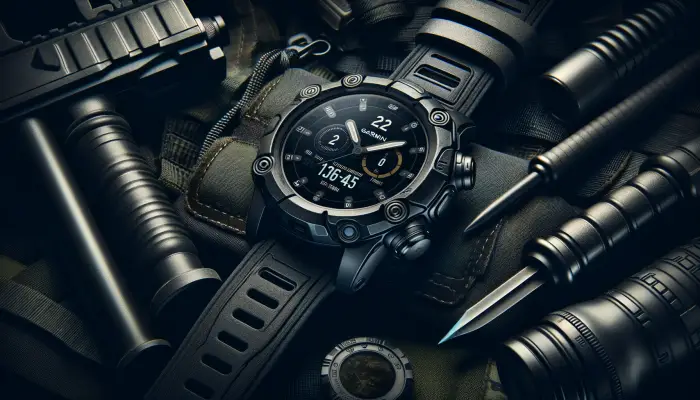
The Garmin Enduro 3 delivers what backcountry hunters need most: exceptional battery life in a rugged, lightweight package. With 120 hours of GPS runtime (320+ with solar) and focused outdoor functionality, it’s purpose-built for extended wilderness trips.
Our verdict: The Enduro 3 offers virtually all Fenix 8 features at $100-$300 less with superior battery life. For hunters who don’t need the speaker, microphone, or dive features, it’s the smarter choice.
Overview: Advantages and Disadvantages
Advantages
- Industry-leading battery life: 120 hours GPS (320+ with solar)—no other GPS watch comes close
- Lightweight design: At 63g, it’s 34% lighter than the Fenix 8 51mm variant
- Better value: $300 less than comparable Fenix 8 Solar with superior battery performance
- Redesigned solar panel: 120% more efficient than Enduro 2, improving both charging and display clarity
- Full Fenix 8 software: All navigation, training, and health features included
- Sapphire crystal display: Extremely scratch-resistant for harsh backcountry conditions
Disadvantages
- Single size option: 51mm only—too large for smaller wrists
- No speaker/microphone: Can’t make Bluetooth calls or record voice memos
- No AMOLED option: MIP display only, less vibrant than Fenix 8 AMOLED
- Thick profile: 15.7mm thick—can catch on rocks, branches, or climbing holds
- Solar claims require ideal conditions: Real-world solar gains are less than advertised
- No dive features: Not suitable for underwater hunting or diving activities
Key Specifications
| Feature | Specification |
|---|---|
| Battery (Smartwatch) | 36 days (90 with solar) |
| Battery (GPS) | 120 hours (320 with solar) |
| Battery (Multi-band GPS) | 60 hours (210 with solar) |
| Weight | 63g (with UltraFit band) |
| Display | 1.4″ MIP with enhanced solar ring |
| Case Size | 51mm (only option) |
| Thickness | 15.7mm |
| Water Rating | 10 ATM |
| Price | $899 |
Source: Garmin Official Specifications
Battery Life: The Headline Feature
The Enduro 3’s solar panel redesign delivers 120% more power than the Enduro 2. Garmin achieved this by reconfiguring solar cells around the display edge and removing the transparent solar layer that covered previous models—improving both energy harvesting and display clarity.
Real-World Battery Performance
Expert testing confirms the battery claims hold up under real conditions. DC Rainmaker’s in-depth review verified 120 hours of GPS tracking from a full charge. Outdoor Gear Lab achieved 20 days of mixed use including 8 hours of GPS-tracked training.
“If you don’t care about the speaker bits or diving, then this is the Fenix 8 you wanted.” — DC Rainmaker
Reddit users report varying results based on usage patterns:
- Light users (5 hours GPS/week): 30-35 days between charges
- Moderate users (10-15 hours GPS/week): Approximately 2 weeks
- Heavy users (15-20 hours GPS/week): About 2 weeks with frequent GPS tracking
Hunting-Specific Battery Scenarios
- Week-long elk hunt: GPS tracking throughout with power to spare—verified by multiple user reports
- Extended backpack hunts: 10+ days without charging is realistic for most users
- Expedition mode: Potentially unlimited runtime with adequate sun exposure, though real-world conditions rarely match Garmin’s 50,000 lux testing standard
Solar Charging Reality Check
While the improved solar panel is impressive, real-world solar gains require context. Garmin Forums users report approximately 1% battery gain per 100 klux/h of exposure, with maximum readings around 150 klux/h in ideal conditions.
“The solar panel is a bit less useful than advertised. Even in ideal sunny and treeless conditions, having continuous 50k lux conditions is hard to achieve on trail.” — The Trek thru-hiking review
Important consideration for hunters: A northbound hiker wearing the watch on their left wrist will have minimal sun exposure during morning hours when the sun is to the east. Body positioning and tree cover significantly reduce solar intake—one user documented their own shadow reducing solar gains to approximately 15%.
DC Rainmaker noted that using navigation features like ClimbPro resulted in performance “far from the 320 hours Garmin claims.” Garmin has acknowledged this and promised software updates to improve battery efficiency during navigation.
What It Shares with Fenix 8
According to DC Rainmaker: “The Enduro 3 features all of the same software features as the Fenix 8 Solar (excluding the voice control functionality).” This includes:
Navigation Features
- Preloaded TopoActive maps with detailed terrain data
- Multi-band GPS with SatIQ technology for automatic mode switching
- Breadcrumb navigation and TracBack for retracing your route
- Round-trip routing for planned loops
- NextFork distance indicators on trails
ABC Sensors
- Barometric altimeter for accurate elevation tracking
- 3-axis compass for reliable direction finding
- Storm alerts from barometric pressure changes—critical for backcountry safety
Hunting-Relevant Widgets
- Sunrise/sunset times with hunting-optimized golden hour data
- Moon phase display for game activity prediction
- Detailed weather forecasts
- inReach device pairing for satellite communication
- Waypoint marking for stand locations, kills, and camp
Health and Training Features
- Elevate Gen 5 optical heart rate sensor
- HRV status and training readiness metrics
- Body Battery energy monitoring
- Sleep tracking with sleep score
- Blood oxygen (SpO2) monitoring—useful for altitude acclimatization
What It Doesn’t Have
The Enduro 3 intentionally omits features to optimize battery life and reduce cost. DC Rainmaker notes that “most Enduro users have said they don’t care about or want smartphone features like microphones or speakers.”
- Speaker and microphone: No voice memos, voice commands, or hands-free Bluetooth calls
- Dive features: Not rated for recreational diving (10 ATM water resistance handles rain and stream crossings)
- AMOLED display option: MIP solar display only—better for sunlight visibility but less vibrant indoors
- Smaller case sizes: 51mm is the only option—no 43mm or 47mm variants
- Voice-enabled features: Can’t access modes or record geotagged voice notes
For most hunters, these omissions are irrelevant. The core outdoor functionality remains intact, and the trade-offs directly benefit battery life.
Design and Build Quality
At 63 grams with the UltraFit nylon band, the Enduro 3 is 34% lighter than any Fenix 8 variant—a noticeable difference during multi-day hunts. The weight reduction comes from a fiber-reinforced polymer case (replacing the Enduro 2’s titanium backplate) combined with a titanium bezel.
Durability in Real-World Testing
The sapphire crystal has proven highly scratch-resistant in expert testing. Android Authority’s reviewer reported only one noticeable scratch on the titanium bezel after months of climbing gym use—though they noted the 15.7mm thickness can cause the watch to catch on holds and obstacles.
“Despite its size, I often forget that the Enduro 3 is on my wrist because of how shockingly light it is.” — Android Authority
Durability certifications:
- MIL-STD-810 for extreme temperatures, shock, and humidity
- 10 ATM water resistance (100 meters)—handles any wet-weather hunting scenario
- Sapphire crystal—”extremely scratch- and smash-resistant” according to Outdoor Gear Lab
The UltraFit nylon band is comfortable for extended wear and dries quickly after stream crossings. However, some users prefer swapping to a silicone band for wet conditions.
Enduro 3 vs Fenix 8 Solar: Complete Comparison
| Feature | Enduro 3 | Fenix 8 Solar 51mm |
|---|---|---|
| Price | $899 | $999-$1,199 |
| GPS Battery | 120 hrs (320 solar) | 78 hrs (116 solar) |
| Smartwatch Battery | 36 days (90 solar) | 29 days (48 solar) |
| Weight | 63g | 89-95g (depending on band) |
| Thickness | 15.7mm | 14.7mm |
| Speaker/Mic | No | Yes |
| Dive Mode | No | Yes (40m) |
| Display Options | MIP only | MIP or AMOLED |
| Size Options | 51mm only | 43, 47, 51mm |
| Case Material | Fiber-reinforced polymer + titanium bezel | Titanium or stainless steel |
The Enduro 3 offers 50%+ more GPS battery life at $100-$300 less. Tom’s Guide concludes: “The Enduro 3 offers outstanding sports tracking and is a cheaper option than the Fenix 8, despite having better battery life. If you don’t need the mic and speaker or AMOLED display on the Fenix 8, the Enduro 3 is better value.”
Who Should Buy the Enduro 3
- Backcountry hunters on week-long trips: The 120+ hour GPS battery eliminates charging anxiety in the field
- Hunters who prioritize battery life above all features: No other GPS watch matches this runtime
- Those who want Fenix 8 capability at a lower price: Save $300 while gaining battery life
- Ultramarathon runners who also hunt: The crossover athlete’s ideal watch
- Anyone comfortable with the 51mm case size: Large wrists (7″+ circumference) will find it comfortable
- Users who value lightweight gear: At 63g, it’s lighter than many basic digital watches
Who Should Consider Alternatives
- Smaller wrist size: Fenix 8 offers 43mm and 47mm options—the 51mm Enduro 3 will overwhelm wrists under 6.5″
- Dive capability needed: Fenix 8 includes recreational dive features to 40 meters
- Voice memo use: Fenix 8’s built-in microphone allows geotagged voice notes for marking locations or recording observations
- Budget constraints: Instinct 2 Solar at $399 or Instinct 3 Solar at $449 delivers core navigation features
- Prefer AMOLED displays: Fenix 8 AMOLED offers significantly better indoor visibility and vibrant colors
- Want voice assistant features: Fenix 8 supports voice commands for hands-free operation
Buyer’s Guide: Choosing the Right GPS Watch for Hunting
Battery Life Priorities
For multi-day backcountry hunts, battery life isn’t just convenience—it’s safety. The Enduro 3’s 120-hour GPS runtime means you’ll never be without navigation when you need it most. Compare this to:
- Apple Watch Ultra 2: ~12 hours GPS
- Fenix 8 Solar: ~78-116 hours GPS
- Instinct 2 Solar: ~48 hours GPS
Size Considerations
The 51mm case size is non-negotiable with the Enduro 3. Measure your wrist before purchasing:
- Under 6.5″ wrist: Consider Fenix 8 47mm or 43mm
- 6.5″-7″ wrist: Enduro 3 will fit but may feel large
- Over 7″ wrist: Ideal fit for the Enduro 3
Feature Trade-offs
Ask yourself these questions:
- Do you need voice memos? If yes, choose Fenix 8
- Do you dive or snorkel? If yes, choose Fenix 8
- Is weight a priority? If yes, choose Enduro 3 (26g lighter than comparable Fenix 8)
- Do you hunt trips exceed 3 days? If yes, the Enduro 3’s battery advantage is significant
Price Value Analysis
The Enduro 3 launched at $899—$200 less than the original Enduro 2 despite significant improvements. This pricing strategy reflects Garmin listening to customer feedback about the Enduro line’s value proposition.
Compared to alternatives:
- vs. Fenix 8 Solar 51mm ($1,199): Save $300, gain 54% more GPS battery life
- vs. Fenix 8 Solar 47mm ($999): Save $100, gain significantly more battery, but larger case
- vs. COROS Vertix 2S ($599): Pay $300 more for Garmin’s ecosystem, maps, and proven reliability
This makes the Enduro 3 arguably the best value in Garmin’s premium lineup for hunters focused on outdoor functionality over smart features.
Frequently Asked Questions
Is the Enduro 3 worth it over the Fenix 8?
For most hunters, yes. You get superior battery life (50%+ more GPS runtime), lighter weight (26g less), and save $100-$300. The only reasons to choose the Fenix 8 are: smaller case size options, speaker/microphone features, dive capability, or AMOLED display preference.
How accurate is the solar charging claim?
The 320-hour GPS claim requires continuous 50,000 lux conditions—essentially constant direct sunlight. Real-world testing shows meaningful solar gains in sunny conditions, but don’t expect to achieve maximum battery life unless you’re in open terrain with your watch face consistently exposed to sun. Most users report the solar feature adds useful battery buffer rather than eliminating charging entirely.
Can the Enduro 3 replace a dedicated hunting GPS?
For most hunters, yes. The preloaded TopoActive maps, multi-band GPS accuracy, and waypoint marking handle typical hunting navigation needs. However, if you need to share waypoints with hunting partners using handheld GPS units, or require highly specialized topo maps, a dedicated unit like the Garmin GPSMAP 67i may still be valuable as a backup.
Is 51mm too big for hunting?
This depends on your wrist size and hunting style. The 51mm case is large but the 63g weight makes it comfortable. However, the 15.7mm thickness can catch on branches, climbing holds, or tight spaces. If you’re frequently in dense brush or tight shooting positions, consider whether the size might interfere.
Does it work with inReach for emergency communication?
Yes. The Enduro 3 pairs with inReach devices to send/receive messages and trigger SOS directly from your wrist. This is a crucial safety feature for remote backcountry hunts.
How does it compare to the Enduro 2?
The Enduro 3 improves on the Enduro 2 with: 120% more efficient solar panel, Fenix 8 software features, Elevate Gen 5 heart rate sensor, and a $200 lower price. The only trade-off is the switch from titanium to polymer case back, which contributed to the weight reduction.
Verdict
The Garmin Enduro 3 is the ultimate battery-life GPS watch for serious backcountry hunters. With 120+ hours of GPS runtime (320+ with solar in ideal conditions), it outlasts any hunt without charging. The focused feature set—omitting the speaker and dive modes—keeps weight low at 63g and price reasonable at $899.
DC Rainmaker summarizes it well: “Out of all of today’s releases, the Enduro 3 embodies the product that Garmin listened to the customer base most carefully on.”
If your wrist accommodates the 51mm case and you don’t need Fenix-specific features like the speaker, microphone, or dive modes, the Enduro 3 is the smart choice for extended wilderness hunting.
Related Guides
- Garmin Fenix 8 Review: Complete Analysis
- Best Garmin Watch for Hunting (2024 Buyer’s Guide)
- Best GPS Watch Under $500 for Hunters
- Garmin Instinct 2 Solar Review
- Garmin Instinct 3 Review
- Best Satellite Communicators for Hunting
- Garmin inReach Mini 2 Review
- Garmin GPSMAP 67i Review
- Tactical Gear Buyer’s Guide
- Best Hunting Backpacks for Backcountry
- Backcountry Hunting Gear Checklist
- Complete Elk Hunting Guide
- Deer Hunting Tips and Tactics
- Hunting Safety Guide
- Best Hunting GPS Apps Compared