
Affiliate Disclosure: This article contains affiliate links to Amazon. If you purchase through these links, we may earn a commission at no additional cost to you. This helps support our independent testing and reviews.
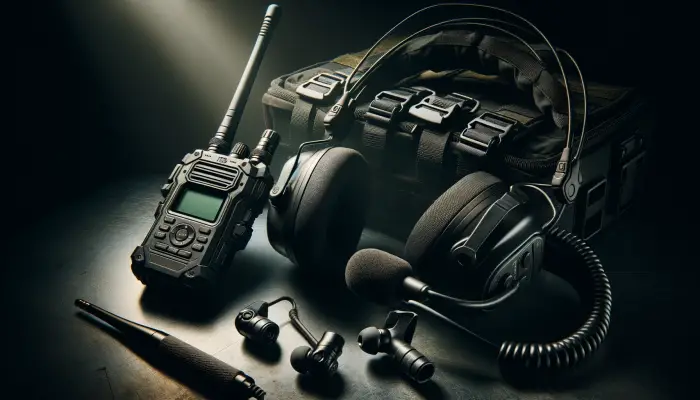
Headset-compatible radios keep communication silent—essential when you don’t want radio chatter alerting game to your presence. The right headset turns your two-way radio into a tactical communication tool that can make or break your hunt.
After researching user experiences across hunting forums, myGMRS.com discussions, and verified reviews, we’ve identified the best radio and headset combinations for silent hunting communication. Our recommendation: pair a quality GMRS radio like the Midland GXT67 Pro with a dedicated throat mic headset for whisper-quiet, hands-free operation.
“Recently used the 5 watt radio while elk hunting. Impressed by the clarity and battery life. Range was good in the backcountry. If you want rock solid radios, buy these.” — Rocky Talkie Expedition user, GearJunkie field test
Overview: Hunting Radio Headset Systems
Silent communication during hunts requires two components working together: a quality GMRS or FRS radio with headset compatibility, and an appropriate microphone system. The combination you choose depends on how critical silence is to your hunting situation and your budget.
Advantages of Headset-Compatible Hunting Radios
- Silent operation: No external speaker noise to spook game within hearing range
- Hands-free communication: VOX (voice-activated) mode eliminates button presses that create noise
- Whisper transmission: Throat mics allow communication at volume levels inaudible to nearby wildlife
- Improved coordination: Real-time communication between hunters in different stands or positions
- Weather protection: Many headset-compatible radios offer IP67 waterproof ratings for rain and snow
Disadvantages and Limitations
- Added complexity: More equipment to manage, charge, and potentially fail in the field
- Higher cost: Quality radio plus headset combinations run $160-$280 total
- GMRS licensing required: 5-watt radios require a $35 FCC GMRS license (valid 10 years, covers entire family)
- Throat mic learning curve: Proper positioning takes practice; performance varies by user anatomy
- Real-world range limitations: Forest terrain typically limits range to 0.5-5 miles regardless of advertised specs
Best Radios for Headset Use
| Radio | Power | Headset Jack | Price |
|---|---|---|---|
| Midland GXT67 Pro | 5W GMRS | 2.5mm/3.5mm | $200 |
| Midland GXT1000VP4 | 5W GMRS | 2.5mm/3.5mm | $80/pair |
| Rocky Talkie Expedition | 5W GMRS | 2.5mm | $180 |
| Oxbow Renegade X | 2W FRS | Bluetooth | $180 |
Midland GXT67 Pro
The Midland GXT67 Pro represents Midland’s flagship handheld GMRS radio with full 5-watt power output and repeater capability—a first for their consumer line. The IP67 waterproof rating means it can withstand immersion up to 3 feet for 30 minutes, making it reliable during rainy hunts or accidental drops in water. According to HuntingLife’s review, the repeater access dramatically extends range in mountainous terrain—users report clear transmission at 15 miles when connecting through GMRS repeater networks.
The 2-pin Motorola-compatible headset jack works with most aftermarket throat mics and surveillance earpieces. Real-world testing shows 4+ days of battery life with normal use, though the sealed battery compartment means you cannot swap batteries in the field.
“During a three-hour convoy drive with nearly nonstop chatting between trucks, the GXT67 Pros still had two-thirds of their battery capacity.” — GearJunkie review
Pros
- IP67 waterproof rating survives submersion and heavy rain
- Repeater capability extends range to 15+ miles with network access
- 4-day battery life eliminates mid-hunt recharging concerns
- Clear reception on 20-acre hilly/forested properties per user reports
- 3-year manufacturer warranty
Cons
- Non-replaceable sealed battery limits extended backcountry use
- Indoor reception can be sketchy with static per myGMRS forum users
- Belt clip design requires inverting radio to unfasten
- No USB-C direct charging—requires included 12V charger
Best for: Hunters who need maximum range, waterproof reliability, and don’t mind the premium price. Not ideal for multi-day backcountry hunts without access to charging.
Midland GXT1000VP4
The budget-conscious hunter’s choice, the GXT1000VP4 delivers essential features at roughly $40 per radio when purchased as a pair. The whisper mode is the standout hunting feature—OutdoorEmpire’s review notes that whispers transmit crystal clear, making it ideal for communication between deer blinds. The included headsets provide basic hands-free capability out of the box.
However, realistic range expectations are critical: despite 36-mile marketing claims, actual performance averages 0.5-2 miles in typical hunting terrain. OutdoorGearLab testing found clear communication to 2 miles with minimal static, degrading significantly beyond 3.5 miles.
“Got these for hunting specifically for the Whisper feature which works far better than expected. Whispers are crystal clear which is great for talking between deer blinds.” — Verified Amazon reviewer
Pros
- Excellent value at ~$40 per radio
- Whisper mode transmits quiet speech at normal volume
- Includes basic headsets and desktop charger
- Available in Mossy Oak camouflage pattern
- Animal call alerts useful for coordinating game sightings
Cons
- Real-world range of 0.5-2 miles—not the advertised 36 miles
- Included headset uncomfortable for extended wear per user feedback
- Complex menu system requires manual memorization
- Some users report complete signal loss at just 0.5 miles in urban environments
Best for: Budget-conscious hunters who stay within 1-2 miles of each other. Not recommended for large properties or mountainous terrain where range is critical.
Rocky Talkie Expedition
Purpose-built for backcountry use, the Rocky Talkie Expedition excels in cold weather hunting conditions. The 1800 mAh lithium battery delivers 4-6 days of use even at -20°F—a critical advantage for late-season hunts. GearJunkie’s hunting testers used these radios for over 2 weeks during Colorado high-country hunts with heavy snow, reporting consistently clear communication through tree cover.
The single 2.5mm jack limits headset options compared to 2-pin Motorola systems, but Rocky Talkie’s dedicated Waterproof Hand Mic ($65) provides a quality hands-free option. Field testing showed 5.1-mile range with minor obstructions and 1.4 miles in heavily obstructed terrain.
“The Rocky Talkie Expedition Radio provided consistently clear and reliable two-way voice communications over extended distances that often involved tree cover.” — GearJunkie hunting field test
Pros
- Cold-rated battery performs at -20°F for late-season hunts
- IP67 waterproof with water-shedding design
- Steel belt clip significantly more durable than plastic alternatives
- Excellent dust and sand resistance—survived desert testing
- 5.1-mile range documented in minor obstructions
Cons
- Single 2.5mm jack limits third-party headset compatibility
- No repeater capability limits maximum range extension
- Premium $180 single-unit price
- Waterproof hand mic sold separately at $65
Best for: Late-season and cold-weather hunters, elk hunters in mountain terrain, backcountry hunts lasting multiple days. Not ideal for hunters wanting maximum headset flexibility.
Oxbow Renegade X
The Oxbow Renegade X takes a different approach with built-in Bluetooth connectivity for wireless headset pairing. Developed with input from backcountry athletes, the radio features a completely sealed PTT button and waterproof speaker membrane that prevents freezing—useful for early morning hunts in cold conditions. The 36+ hour battery life and ability to disable beep alerts make it hunting-appropriate.
However, user feedback reveals significant limitations. SnoWest forum users report the Bluetooth connection doesn’t remember pairings after power-off, requiring re-pairing before each hunt. More concerning: some users report volume output so low you can barely hear transmissions even room-to-room.
“The group chat kept disconnecting and the radio calls were spotty—sometimes they got the call, sometimes they didn’t.” — SnoWest forum user
Pros
- Bluetooth eliminates cables that snag on brush
- No FRS license required—operates license-free at 2 watts
- Sealed PTT button prevents moisture and freezing issues
- Can disable beep alerts for silent hunting operation
- Excellent Oxbow customer service for troubleshooting
Cons
- FRS 2-watt power limits range compared to 5W GMRS options
- Bluetooth doesn’t remember pairings—requires manual reconnection
- Multiple reports of very low speaker/headset volume
- 1-5 mile backcountry range significantly less than GMRS alternatives
- Random transmission issues reported when VOX accidentally activates
Best for: Hunters prioritizing wireless convenience over range, or those wanting to avoid GMRS licensing. Not recommended for users needing reliable Bluetooth connectivity or maximum range.
Headset Types for Hunting
Throat Microphones
Throat mics use dual transducers positioned against your larynx to convert vocal cord vibrations into audio signals. According to IASUS Concepts, quality throat mics can pick up whispered speech—essential when game is close. Because they capture vibration rather than airborne sound, throat mics are largely immune to wind noise that renders boom mics unusable.
The trade-off: Rescom’s microphone guide notes that speech elements formed by lips, tongue, and nasal cavity are less pronounced with throat mics. Performance also depends heavily on neck anatomy, tissue density, and even facial hair affecting vibration transfer.
Best for: Treestand hunting, ground blinds, stalking situations, turkey calling setups, and any scenario where game is within hearing distance of normal speech.
Not recommended for: Users who haven’t practiced proper positioning, or situations where audio clarity is more important than silence.
Boom Microphones
Traditional boom mics extend near your mouth and capture airborne sound directly. Audio quality is superior to throat mics—professional radio broadcasters universally use boom positioning for optimal voice reproduction. The included Midland AVPH7 headset uses this design.
The limitation is obvious: you must speak at audible volume, which defeats the purpose in close-proximity hunting situations.
Best for: Western hunting where game is distant, group hunts with casual communication, camp-to-field coordination where silence isn’t critical.
Not recommended for: Any situation where radio chatter would spook game within 50-100 yards.
In-Ear Surveillance Style
Covert earpiece with inline PTT microphone. The discrete appearance works well for general use, though audio quality falls between throat and boom mics. Budget options like the Retevis Two-Way Earpiece ($15-25) provide adequate performance for testing whether headset hunting suits your needs before investing more.
Best for: General hunting use, testing headset hunting concept, situations with moderate silence requirements.
Code Red Assault Throat Mic
The Code Red Assault stands as the most frequently recommended throat mic for hunting use. The dual throat transducers pick up voice directly from vocal cord vibrations, and the large military-style PTT button is accessible with gloves—a practical consideration during cold-weather hunts.
User feedback from Code Red’s product page shows positive hunting applications: one reviewer specifically mentions using it for coyote hunting to stay in touch with other hunters while alerting each other when predators come into view. The adjustable neckband fits sizes 13-19 inches.
“From unboxing through unit testing, I was beyond impressed by CodeRed and the quality evident in their products. All items were excellent in both fit and function.” — Code Red customer review
Pros
- Dual transducers provide reliable whisper pickup
- Glove-friendly PTT button for cold-weather use
- Modular design works with multiple radio connector types
- Adjustable fit (13-19″ neck sizes)
- Excellent customer service and return policy
Cons
- Doesn’t work well with all radios—one user reported issues with Garmin Rino 530HCX
- Performance varies by individual anatomy and positioning skill
- $70-$100 price requires commitment to headset hunting
- Some users report it works better on Motorola-compatible radios than others
Best for: Serious hunters committed to silent communication. Test compatibility with your specific radio before field use.
VOX (Voice Activated) Operation
VOX mode transmits automatically when you speak, eliminating the PTT button press that can create noise. This is essential for true hands-free hunting communication—but calibration is critical.
- High sensitivity: Triggers on whispers, but may false-trigger on wind, breathing, or brush noise
- Low sensitivity: Requires louder speech, reducing false triggers but potentially missing whispered commands
Critical tip: Multiple Oxbow Renegade X users reported “random transmitting” that was actually VOX accidentally activating. Always verify VOX settings before hunting, and test in realistic conditions including wind and movement.
Dial in sensitivity for your specific headset, voice level, and hunting conditions. Test before the hunt in conditions similar to your actual hunting environment.
Midland GXT67 Pro + Headset Setup
The GXT67 Pro supports standard 2-pin Motorola-compatible headsets, providing broad compatibility with aftermarket options. Recommended pairing:
- Headset: Code Red Assault throat mic ($70-$100)
- Radio: Midland GXT67 Pro ($200)
- Total investment: ~$270-$300
Setup Tips
- Position throat mic snugly against larynx—too loose reduces pickup, too tight causes discomfort
- Test transmission clarity before hunting at the whisper level you’ll actually use
- Adjust VOX sensitivity to avoid wind triggers specific to your hunting location
- Carry backup batteries for headset (radio battery lasts 4+ days)
- Practice with system at home before relying on it during hunting season
Bluetooth Options
The Oxbow Renegade X includes Bluetooth connectivity for wireless headset pairing. Advantages:
- No cables to snag on brush or branches
- Works with Bluetooth helmet systems for ATV/UTV hunting access
- Compatible with wireless earbuds (some models)
Trade-off: The Renegade X operates on FRS frequencies (2 watts), limiting range compared to 5-watt GMRS options. Real-world testing shows 1-5 mile backcountry range versus 2-8 miles for comparable GMRS radios.
Known issues: Per user reports, the Bluetooth doesn’t retain pairings after power-off, and third-party PTT buttons may cause continuous mic keying if pressed rapidly.
Headset Compatibility
Most hunting radios use Motorola 2-pin connector (2.5mm audio, 3.5mm mic). Verify compatibility before purchasing—mismatched connectors are the most common headset issue:
- Midland radios: 2-pin Motorola compatible (most aftermarket headsets work)
- Rocky Talkie: 2.5mm single-pin (limited third-party options)
- Motorola Talkabout: 2-pin Motorola compatible
- Oxbow Renegade X: Bluetooth only (no wired headset option)
Recommended Headsets
Code Red Assault ($70-$100)
Purpose-built tactical throat mic with dual transducers and adjustable sensitivity. Works with most 2-pin Motorola radios. Best for serious hunters committed to silent communication. Waterproof version available.
Midland AVPH7 ($30)
Included with some Midland radio packages. Basic over-ear boom mic headset—adequate for non-critical situations but not suitable for close-proximity silent hunting. Good starting point before investing in throat mic.
Retevis Two-Way Earpiece ($15-$25)
Budget surveillance-style option for occasional use. Adequate for testing whether headset hunting works for you before committing to premium equipment. Replace if you become serious about silent communication.
When Headsets Matter
Essential For:
- Treestand hunting where silence is critical (deer within 50 yards)
- Calling setups (turkey, predator) where game is close and alert
- Coordinated drives with specific timing requirements
- Ground blind hunting where exterior noise travels
- Any situation where radio noise would spook game
Optional For:
- Western hunting where game is typically 200+ yards distant
- Group hunts with casual communication needs
- Camp-to-field coordination
- Hunters who typically hunt alone
GMRS Licensing Requirements
All 5-watt GMRS radios require an FCC GMRS license:
- Cost: $35 one-time fee
- Duration: 10 years
- Coverage: Licensee and immediate family members (spouse, children, parents, siblings, in-laws)
- Requirements: Must be 18+, no test required
- Application: Online through FCC Universal Licensing System (ULS)
The license requirement is the main advantage of FRS-only radios like the Oxbow Renegade X—no license needed, but you’re limited to 2-watt power output.
Buyer’s Guide: Choosing Your Setup
For Maximum Range and Reliability
Choose: Midland GXT67 Pro + Code Red Assault throat mic (~$300 total)
The repeater capability, waterproof construction, and 4-day battery life make this the premium choice for serious hunters who need communication over large properties or mountainous terrain.
For Cold Weather Hunting
Choose: Rocky Talkie Expedition + Rocky Talkie Waterproof Hand Mic (~$245 total)
The lithium battery rated to -20°F outperforms all alternatives in late-season conditions. Steel belt clip withstands harsh use.
For Budget-Conscious Hunters
Choose: Midland GXT1000VP4 + Retevis Earpiece (~$95 total for pair)
Adequate for hunters staying within 1-2 miles of each other. Whisper mode provides basic silent communication. Upgrade components if you become serious about headset hunting.
For Wireless Convenience
Choose: Oxbow Renegade X (~$180)
Only if cable snags are a major concern and you accept reduced range and Bluetooth quirks. Verify volume output meets your needs before committing.
FAQ
Do I really need a GMRS license for hunting radios?
Yes, for 5-watt GMRS radios. The $35 FCC license covers you and your entire family for 10 years with no test required. FRS radios (2 watts or less) are license-free but have significantly reduced range. For serious hunting communication, the license investment is worthwhile.
What’s the realistic range for hunting radios in forest terrain?
Expect 0.5-5 miles in typical forest/hunting terrain, regardless of advertised claims. Dense timber and hills reduce range significantly. Mountain-top to mountain-top may achieve 20+ miles with line of sight, but this rarely applies to actual hunting scenarios.
Can I use AirPods or regular Bluetooth earbuds with hunting radios?
Only with Bluetooth-equipped radios like the Oxbow Renegade X, and compatibility varies by earbud model. Most hunting radios use wired connections. Bluetooth earbuds also lack PTT functionality, requiring VOX mode which can cause issues.
How do I know if a throat mic is compatible with my radio?
Check the connector type. Most Midland and Motorola-compatible radios use 2-pin Motorola (2.5mm audio, 3.5mm mic). Rocky Talkie uses single 2.5mm. Always verify before purchasing—connector mismatch is the most common compatibility issue.
Do throat mics work as well as regular microphones?
Audio clarity is lower than boom mics because throat mics miss speech elements formed by lips and tongue. However, throat mics excel at whisper pickup and wind noise rejection. For hunting, the stealth advantage typically outweighs clarity limitations.
How long do hunting radio batteries last in cold weather?
Standard batteries may lose 50%+ capacity in freezing conditions. The Rocky Talkie Expedition’s lithium battery is specifically rated for 4-6 days at -20°F. For other radios, keep spare batteries warm in an inside pocket and swap as needed.
Verdict
For serious hunting communication, pair a 5-watt GMRS radio with a quality throat mic headset. The Midland GXT67 Pro with a Code Red Assault provides professional-grade silent communication for hunters who need maximum range and reliability.
Budget-conscious hunters should start with the Midland GXT1000VP4 pair—the whisper mode alone justifies the cost for deer hunting, though range limitations mean it’s best for parties staying within 1-2 miles.
Cold-weather hunters should seriously consider the Rocky Talkie Expedition for its proven -20°F battery performance.
Test your setup before hunting season. Headset fit, VOX sensitivity, and transmission clarity vary by user, equipment, and environment. A setup that works perfectly at home may need adjustment in the field.
Where to Buy
- Midland GXT67 Pro on Amazon
- Midland GXT1000VP4 on Amazon
- Rocky Talkie Expedition (Official Site)
- Oxbow Renegade X Hunting Edition (Official Site)
- Code Red Assault Throat Mic (Official Site)
Related Guides
- Midland GXT67 Pro Review
- Best GMRS Radios for Hunting
- FRS vs GMRS Radios
- Tactical Gear Buyer’s Guide
- Best Two-Way Radios
- Hunting Communication Gear Guide
- Cold Weather Hunting Gear
- Turkey Hunting Gear Essentials
- Deer Hunting Tips for Beginners
- Treestand Hunting Complete Guide
- Ground Blind Hunting Strategies
- Predator Calling Setup Guide
- Elk Hunting Communication Tips
- Backcountry Hunting Gear Checklist
- Hunting Safety Essentials