
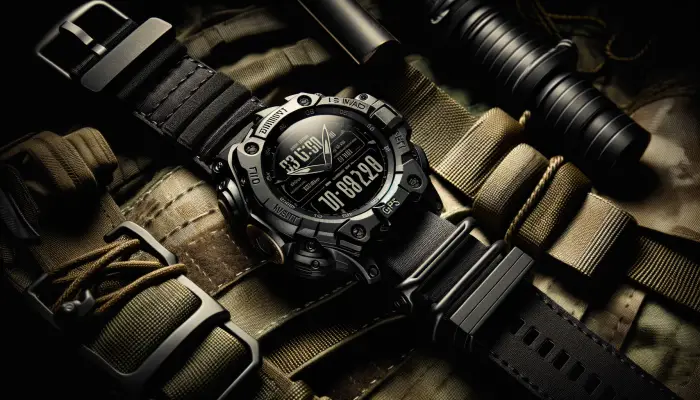
Solar-powered GPS watches convert sunlight into extended battery life—transforming week-long hunts from charging anxieties into set-and-forget convenience. For backcountry hunters, solar capability provides genuine utility beyond marketing claims.
Our top pick: the Garmin Instinct 3 Solar at $449 delivers unlimited smartwatch runtime in outdoor conditions with 70+ hours of GPS tracking—the best value in solar GPS watches for hunters who spend significant time in open terrain.
We evaluated these watches based on real-world battery performance, GPS accuracy under tree cover, durability specs that matter for hunting conditions, and actual user feedback from hunting forums and outdoor communities. All battery claims reference Garmin’s official specifications and have been validated against third-party testing from sources like DC Rainmaker and Outdoor Gear Lab.
Quick Comparison: Best Solar GPS Watches for Hunting
| Watch | Case Size | Weight | Smartwatch Battery | GPS Battery (Solar) | Water Rating | Price |
|---|---|---|---|---|---|---|
| Garmin Instinct 3 Solar | 45mm/50mm | 53g/59g | Unlimited* | 70+ hours | 10 ATM | $449 |
| Garmin Enduro 3 | 51mm | 63g | 90 days | 320 hours | 10 ATM | $899 |
| Garmin Fenix 8 Solar | 47mm/51mm | 52-74g | 48 days | 92-149 hours | 10 ATM | $1,099-$1,199 |
| Garmin Instinct 2X Solar | 50mm | 67g | Unlimited* | 60+ hours | 10 ATM | $449 |
*With adequate sun exposure (50,000 lux, 3 hours/day). All models meet MIL-STD-810 military standards for thermal, shock, and water resistance. Operating temperature range: -20°C to 60°C (-4°F to 140°F).
Overview: Solar GPS Watches for Hunters
Advantages
- Extended backcountry trips without charging: Multi-day hunts become worry-free with solar extending GPS battery by 30-50% in mixed conditions
- Always-on MIP displays: Sun-readable screens work better in bright conditions than AMOLED alternatives
- Military-grade durability: All models meet MIL-STD-810 standards for shock, temperature extremes, and water resistance to 100 meters
- Dedicated Hunt mode: Built-in hunting activity profiles with sunrise/sunset, compass, altimeter, and weather data
- Waypoint navigation: Save stand locations, parking spots, and trail markers for reliable backcountry navigation
Disadvantages
- Solar claims require ideal conditions: Garmin’s “unlimited” battery assumes 50,000 lux for 3 hours daily—partial shade yields only ~7,500 lux (15% of benchmark)
- Dense timber limits solar gain: Heavy forest canopy reduces solar charging to near-zero, negating the premium over non-solar models
- MIP displays less vibrant: Solar models sacrifice AMOLED screen quality for battery efficiency
- No offline maps on Instinct models: DC Rainmaker notes launching a $500 outdoor watch without offline maps in 2025 is “pretty hard to swallow”
- Premium pricing: Solar models cost $50-200 more than non-solar equivalents
Garmin Instinct 3 Solar – Best Value ($449)
The Instinct 3 Solar represents Garmin’s best balance of solar capability, durability, and value for hunters. Available in 45mm (53g) and 50mm (59g) sizes, this rugged watch meets MIL-STD-810 military standards for thermal shock and water resistance to 100 meters (10 ATM). The metal-reinforced bezel and fiber-reinforced polymer case handle the abuse of backcountry hunting.
The dedicated Hunt activity profile provides essential field data: sunrise/sunset times, compass heading, altimeter readings, barometer trends, and real-time weather including temperature, wind speed, and direction. The Sight N’ Go feature lets you point at a landmark and navigate toward it—useful for tracking game across ridgelines. Multi-band GPS with SatIQ technology automatically adjusts satellite usage based on conditions, maintaining accuracy even in challenging terrain.
Real-world solar performance depends heavily on terrain. HikingGuy’s outdoor testing confirms the watch performs as advertised in open conditions. One Rokslide forum user hunting in the backcountry recommends switching to gesture-wake mode while in the field to extend battery life on longer hunts.
“The Instinct 3 Solar is a long-lasting, no-nonsense hiking watch. No touchscreen, no fancy maps, but enough to track your hikes. Built for people who want something dependable that works the same in heat, cold, rain, and sweat.” — HikingGuy
Battery Performance
- Smartwatch mode: Unlimited with adequate sun (tested at ~30 days without solar)
- GPS (no solar): 46 hours
- GPS (with solar): 70+ hours
- Expedition GPS: 40+ days (recalculates to 808+ hours in some conditions)
Key Specifications
- Case size: 45mm or 50mm
- Weight: 53g (45mm) / 59g (50mm)
- Water resistance: 10 ATM (100 meters)
- Operating temperature: -20°C to 60°C (-4°F to 140°F)
- GPS: Multi-band with SatIQ
- Display: MIP (Memory-in-Pixel), always-on
Pros
- Best value among solar GPS watches at $449
- Unlimited smartwatch battery with sufficient sun exposure
- Multi-band GPS maintains accuracy in challenging terrain
- Dedicated Hunt mode with full weather and navigation data
- Lightest option in the lineup at 53g (45mm version)
Cons
- No offline topographic maps—navigation limited to waypoints and breadcrumb trails
- Quality control concerns reported: some units show solar panel inconsistencies with up to 20% variation in energy intake between watches
- Limited storage: users report only 12-16MB available out of the advertised 128MB
Who Should Buy
Western big game hunters, plains whitetail hunters, and anyone spending significant time in open terrain where solar charging provides real benefit. Best for hunters who prioritize battery life and durability over advanced mapping features.
Who Should Skip
Hunters primarily in dense timber where solar gain is minimal, or those who need turn-by-turn navigation and detailed topographic maps on-wrist.
Check price on Amazon | Read our full Garmin Instinct 3 Solar review
Garmin Enduro 3 – Maximum Battery ($899)
The Enduro 3 is Garmin’s ultraperformance GPS watch, designed for multi-week expeditions where charging isn’t an option. At 51mm and just 63g with the UltraFit nylon band, it’s 34% lighter than the Fenix 8 despite offering superior battery life. The titanium bezel and fiber-reinforced polymer case deliver military-grade durability at a lower weight than competitors.
Garmin redesigned the solar technology for the Enduro 3, reconfiguring solar cells around the display edge to eliminate the transparent layer that reduced harvesting efficiency on previous models. The result: 120% more efficient solar charging and improved display clarity. DC Rainmaker’s testing found the non-solar battery claims extremely accurate—100.06% of expected life in controlled testing.
For hunters, the Enduro 3 includes preloaded TopoActive maps with turn-by-turn navigation, ClimbPro ascent planning, and a built-in LED flashlight. The 1.4-inch display provides excellent readability for map viewing in the field.
“During activities, the Enduro 3 would often use less than 1% battery per hour in AutoSelect mode, which is extraordinarily good.” — Tom’s Guide
Battery Performance
- Smartwatch mode: 90 days with solar
- GPS (no solar): 90 hours
- GPS (with solar): Up to 320 hours (realistic: ~120 hours in mixed conditions)
- SatIQ mode: 72 hours claimed, 70.83 hours tested by DC Rainmaker
Key Specifications
- Case size: 51mm (single size)
- Weight: 63g (with band)
- Water resistance: 10 ATM (100 meters)
- Display: 1.4-inch MIP, 280 x 280 pixels
- Maps: Preloaded TopoActive maps
Pros
- Industry-leading GPS battery: 320 hours with solar in optimal conditions
- 120% more efficient solar technology than previous generations
- Preloaded topographic maps with turn-by-turn navigation
- Lightweight titanium construction at 63g despite 51mm size
- Built-in LED flashlight for predawn and post-sunset hunting
Cons
- Real-world solar battery falls short of 320-hour claim—expect ~120 hours in typical conditions
- DC Rainmaker found leaving the watch on the map screen significantly drains battery during extended use
- Only available in 51mm—too large for smaller wrists
- Not suitable for diving (lacks leakproof buttons found on Fenix 8)
Who Should Buy
Hunters planning extended backcountry trips (7+ days), those who need on-wrist maps for navigation, and anyone who refuses to carry backup charging options. The Enduro 3 is the “set it and forget it” choice for serious expedition hunters.
Who Should Skip
Day hunters with nightly charging access, those with smaller wrists uncomfortable with 51mm watches, or hunters who don’t need the battery headroom and can save $450 with the Instinct 3 Solar.
Garmin Fenix 8 Solar – Premium Features ($1,099-$1,199)
The Fenix 8 Solar is Garmin’s flagship outdoor watch, combining enhanced solar technology with the most comprehensive feature set available. Choose between 47mm (52-59g) and 51mm (64-74g) sizes—both featuring sapphire crystal and titanium construction. The 51mm version delivers 149 hours of GPS-only runtime, a 22% improvement over the Fenix 7X Solar.
Premium features justify the premium price: preloaded TopoActive maps, built-in speaker and microphone for voice commands, and dive capability (the only solar watch here with leakproof buttons rated for underwater use). GPS accuracy leads the industry—GearJunkie’s 4-month field test found excellent tracking even under thick tree cover.
However, the Fenix 8 launch has been controversial. Some long-time Fenix owners on Garmin Forums describe it as the “worst Fenix launch ever,” citing software bugs and a $300 price increase over the Fenix 7. Garmin has addressed many issues in firmware updates, but early adopters experienced frustration.
“Constantly wore and used the Garmin Fenix 8 Solar for 4 months. Didn’t baby it despite the high price—it stayed on when rock climbing, riding dirt bikes, or doing chores. It got hit, scratched, and exposed to extreme temperature ranges and dust.” — GearJunkie
Battery Performance (51mm)
- Smartwatch mode: 48 days with solar
- GPS-only: 149 hours
- All GPS systems: 92 hours
- Multi-band GPS: 65 hours
Key Specifications
- Case size: 47mm or 51mm
- Weight: 52-59g (47mm) / 64-74g (51mm), varies by band
- Water resistance: 10 ATM (100 meters), dive-rated
- Display: MIP, 280 x 280 pixels
- Materials: Titanium/DLC titanium with sapphire crystal (Solar models only)
Pros
- Best-in-class GPS accuracy, even under heavy tree cover
- Preloaded TopoActive maps with ClimbPro ascent/descent planning
- Built-in speaker/microphone for hands-free voice commands
- Dive-rated with leakproof buttons—unique among solar watches
- Sapphire crystal and titanium construction across all solar models
Cons
- $300 price increase over Fenix 7—the most expensive option by far
- Auto-dimming screen issues at night: display dims more than expected in low light with no manual override
- Solar panels are smaller due to form factor—some users report never seeing charge level increase, only slower discharge
- Software bugs at launch frustrated early adopters (many now resolved)
Who Should Buy
Hunters who want the absolute best GPS accuracy, on-wrist mapping, and premium construction. Those who value features like voice commands, dive capability, or need the most reliable navigation for remote backcountry hunting.
Who Should Skip
Budget-conscious hunters—the Enduro 3 offers similar mapping features and better battery life for $200-300 less. Those who prioritize pure value should consider the Instinct 3 Solar at less than half the price.
Garmin Instinct 2X Solar – Budget Alternative ($449)
The Instinct 2X Solar offers the same unlimited battery promise as the Instinct 3 Solar at a lower entry point (often found discounted). At 50mm and 67g, it’s larger and heavier than the Instinct 3, but adds a standout feature: a built-in LED flashlight borrowed from the Fenix 7X—”surprisingly useful whether I’m using it for everyday tasks or getting ready for a turkey hunt in the morning,” notes Outdoor Life.
The Track Me function proves valuable for turkey hunting, helping hunters chase gobblers over ridges and find their way back to starting points. Waypoint saving lets you mark parking locations and navigate back at hunt’s end. The Tactical Edition ($499) adds specialized features for hunters and shooters: Kill Switch (wipes device data), Stealth Mode (disables wireless and GPS recording), Night Vision Mode (red-shifted display), and ballistics software integration via the Garmin AB Synapse app.
Battery Performance
- Smartwatch mode: Unlimited with solar (40 days without)
- GPS (no solar): 60 hours
- GPS (with solar): 140+ hours
- Basic watch mode: 100 days
Key Specifications
- Case size: 50mm
- Weight: 67g
- Water resistance: 10 ATM (100 meters)
- Display: 1.1-inch MIP
- Special features: Built-in LED flashlight, Night Vision mode (Tactical Edition)
Pros
- Built-in LED flashlight—genuinely useful for pre-dawn and evening hunts
- Tactical Edition offers ballistics integration for long-range shooters
- Often found discounted below $400
- Longer GPS battery than Instinct 3 Solar (140+ vs 70+ hours with solar)
Cons
- Heavier than Instinct 3 Solar (67g vs 53g)
- Older processor lacks some newer features like Training Readiness
- Single 50mm size—no smaller option for those who prefer compact watches
Non-Garmin Alternative: Coros Vertix 2S
While Garmin dominates the solar GPS watch market, the Coros Vertix 2S ($599) deserves consideration for hunters who don’t need solar charging. With 118 hours of standard GPS tracking and 46 days in watch mode, battery life rivals Garmin’s solar models without requiring sun exposure—advantageous for timber hunters.
Rokslide’s hunting-focused review notes the Vertix 2 excels at GPS redundancy, altitude readings, blood oxygen monitoring at elevation, and heart rate tracking—all valuable for backcountry hunting at altitude.
Key limitations: Coros offers only breadcrumb navigation (no turn-by-turn directions), topographic maps must be downloaded separately rather than preloaded, and the ecosystem lacks Garmin’s depth of hunting-specific features. For hunters prioritizing pure battery life without solar dependency and simpler training-focused features, Coros offers compelling value.
How Solar Charging Works
Power Glass Technology
Garmin’s Power Glass lens integrates transparent solar cells beneath the display surface. The cells convert sunlight continuously—you don’t need to stop and charge the watch. Newer models like the Enduro 3 position solar cells around the display edge, improving both efficiency and screen clarity.
Real-World Expectations
Garmin’s solar battery claims assume 50,000 lux hitting the display directly for 3 hours daily. In reality:
- Full sun (50,000 lux): Maximum solar benefit—matches Garmin’s claims
- Partial shade: Only ~7,500 lux (15% of benchmark), per The Trek’s testing
- Overcast: Reduced but still meaningful contribution
- Heavy timber: Minimal solar gain—the “tree tax” applies to solar charging too
- Indoor: No solar contribution
Solar vs Non-Solar Comparison (Instinct 3 Solar)
| Hunting Condition | GPS Battery (No Solar) | GPS Battery (With Solar) | Solar Benefit |
|---|---|---|---|
| Open terrain, sunny (western big game) | 46 hours | 70+ hours | +50% |
| Mixed terrain (ridgelines, meadows) | 46 hours | 55-60 hours | +20-30% |
| Dense timber (eastern whitetail) | 46 hours | 48-50 hours | +5-10% |
GPS Accuracy Under Tree Cover
Forest canopy is “arguably the most challenging environment in which to collect GPS data,” according to research. Tree trunks and branches cause multipath interference, particularly when wet. All watches experience some “tree tax”—distance shorting that can reach 10-15% in dense cover.
Multi-band GPS (available on Instinct 3, Enduro 3, and Fenix 8) significantly improves accuracy under canopy. The Trek found the Instinct 3 Solar’s multi-band GPS “maintained a strong signal even in dense tree cover and mountainous terrain.”
The Fenix 8 Solar shows the best real-world accuracy, with GearJunkie reporting “excellent data for walks, hikes, and bike rides…thick tree cover caused zero issues.”
Buyer’s Guide: Choosing the Right Solar GPS Watch
Choose Solar If:
- You hunt open country (western big game, plains whitetail, high desert)
- Multi-day hunts without charging access (5+ days in the backcountry)
- You want set-and-forget confidence on extended trips
- You value the always-on MIP display’s sun readability
- You’re willing to pay the solar premium for peace of mind
Skip Solar If:
- You primarily hunt dense timber (eastern hardwoods, Pacific Northwest rainforest)
- Day hunts with nightly charging at camp or truck
- You prefer AMOLED display quality over battery life
- Budget constraints—non-solar Instinct 3 saves $50-100
- Your hunting terrain rarely sees direct sunlight
Size Considerations for Hunters
- 45mm (Instinct 3 Solar): Best for smaller wrists, everyday wear, 53g lightest option
- 50mm (Instinct 2X/3 Solar): Balanced size, larger display for easier reading in the field
- 51mm (Enduro 3, Fenix 8): Maximum screen real estate for maps, but noticeable on smaller wrists
Solar vs AMOLED Trade-off
Solar models use MIP (Memory-in-Pixel) displays—always-on, sun-readable, but less vibrant than AMOLED. AMOLED offers stunning color and clarity but requires more frequent charging and struggles in direct sunlight.
For hunting, the MIP display’s sun readability and battery efficiency typically matter more than AMOLED’s visual appeal. Rokslide hunting forum users note the AMOLED Instinct 3 gets 9-12 days with always-on display, dropping to 5-6 days in battery-saving mode—adequate for most hunts but requiring more attention to charging than solar models.
FAQ
Does solar charging really work on GPS watches?
Yes, but with caveats. In open terrain with good sun exposure, solar extends GPS battery by 30-50%. In dense timber, benefits drop to 5-10%. Garmin’s “unlimited battery” claims require 50,000 lux for 3 hours daily—achievable in open western terrain but not in eastern forests.
Which solar GPS watch is best for hunting?
For most hunters, the Garmin Instinct 3 Solar ($449) offers the best value. Upgrade to the Enduro 3 ($899) if you need on-wrist maps and maximum battery for week-plus expeditions.
Can I use these watches for navigation without my phone?
Yes. All models offer waypoint navigation and breadcrumb trails. The Enduro 3 and Fenix 8 Solar add preloaded topographic maps with turn-by-turn navigation. The Instinct models lack offline maps but can save waypoints and navigate between them.
How accurate is GPS under tree cover?
Multi-band GPS (standard on all current models) significantly improves accuracy under canopy. Expect 5-15% distance shorting in heavy timber—the “tree tax” affects all GPS watches. The Fenix 8 Solar shows the best accuracy in challenging conditions.
Are these watches durable enough for hunting?
All models meet MIL-STD-810 military standards for shock, temperature extremes (-20°C to 60°C), and water resistance to 100 meters. The Fenix 8 Solar adds sapphire crystal scratch resistance. Real-world testing confirms they handle rock climbing, ATV riding, and general hunting abuse.
What’s the difference between Instinct 3 Solar and Instinct 2X Solar?
The Instinct 3 Solar has a newer processor with additional health metrics, comes in 45mm and 50mm sizes, and weighs less. The Instinct 2X Solar adds a built-in LED flashlight and offers better GPS battery (140+ hours vs 70+ hours with solar) but weighs 14g more and only comes in 50mm.
Verdict
The Garmin Instinct 3 Solar at $449 delivers the best value for hunters wanting solar capability. The unlimited smartwatch runtime and 70+ hour GPS provide genuine confidence for extended trips without the premium pricing of higher-end models.
Upgrade to the Enduro 3 ($899) for maximum battery life and preloaded topographic maps—essential for remote backcountry navigation on week-plus expeditions. Choose the Fenix 8 Solar ($1,099+) only if you need the absolute best GPS accuracy, premium construction, and features like voice commands and dive capability.
For hunters primarily in dense timber, consider whether the solar premium makes sense—non-solar models or the Coros Vertix 2S may offer better value when sun exposure is limited.