
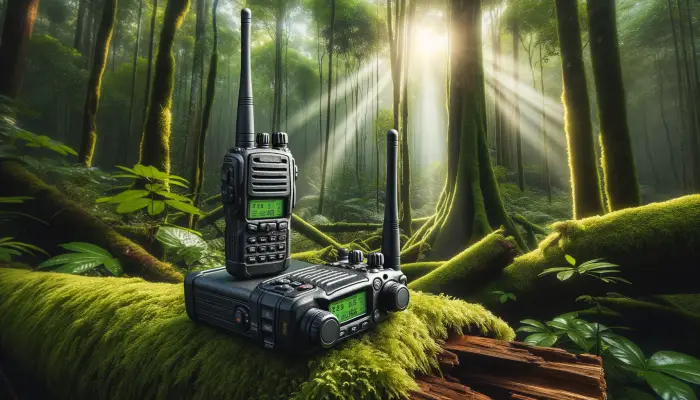
Dense forest and heavy tree canopy present the biggest challenge for two-way radio communication. Radio signals struggle to penetrate vegetation, and the lack of line-of-sight dramatically reduces range. The right radio and technique can maintain communication where cheaper units fail.
This guide covers the best radios for wooded hunting areas and strategies to maximize range in challenging terrain.
Why Wooded Areas Are Challenging
Signal Absorption
Trees, especially when wet, absorb radio waves. Broadleaf trees in full foliage create more interference than bare winter branches. Coniferous forests with year-round needle cover present consistent challenges.
Line of Sight
Radio waves travel in straight lines. In flat, open terrain, you can communicate for miles. In dense timber, a few hundred yards may be the limit regardless of radio power.
Terrain Effects
Ridges, draws, and valley bottoms affect communication unpredictably. You might reach a partner a mile away on one bearing but lose contact with someone 200 yards away around a ridge.
Best Radios for Dense Timber
1. GMRS Radios with Higher Power
GMRS radios operating at 5 watts punch through vegetation better than 0.5-2 watt FRS units. The additional power doesn’t guarantee contact but significantly improves odds.
Recommended models:
- Midland GXT67 Pro (5W GMRS)
- Oxbow Gear Renegade (5W GMRS)
- Midland MXT115 (15W mobile GMRS)
2. UHF Over VHF
UHF (Ultra High Frequency) signals penetrate obstacles better than VHF (Very High Frequency). All FRS and GMRS radios operate on UHF frequencies (462-467 MHz). Avoid VHF marine or business band radios for forest use.
3. Consider Repeater Access
GMRS repeaters—high-powered units on mountaintops or towers—can relay your signal across terrain obstacles. If a repeater exists in your hunting area, programming your radio to use it dramatically extends effective range.
Antenna Considerations
Longer Antennas Perform Better
The stubby antennas included with most radios sacrifice performance for convenience. A 6-8 inch whip antenna improves transmission and reception in difficult conditions.
Antenna Position Matters
Hold radios vertically with the antenna pointing straight up. Tilted or horizontal antennas lose efficiency. When carrying a radio, position it on shoulder straps or chest harnesses with the antenna upright.
Communication Strategies
Move to High Ground
When you need to contact your partner, move uphill if possible. Even 50 feet of elevation gain can establish line-of-sight communication that fails from valley bottoms.
Find Clearings
Step into logging roads, meadows, or natural openings for important transmissions. The break in canopy improves signal propagation significantly.
Schedule Check-Ins
Agree on check-in times and locations before splitting up. “I’ll call from the ridge at 10 AM” works better than random contact attempts throughout the day.
Use Relay Partners
If three hunters are positioned appropriately, one can relay messages between the other two who can’t directly communicate.
Headset Advantages
In quiet hunting environments, radio speakers can alert game to your presence. Earpiece headsets solve multiple problems:
- Incoming messages don’t broadcast to the woods
- Throat mics allow whisper-quiet responses
- Hands remain free for weapon or optic use
- VOX (voice activation) eliminates button noise
Realistic Range Expectations
Ignore manufacturer claims of “35-mile range.” Those numbers assume perfect conditions that don’t exist while hunting. Expect:
| Terrain | FRS (2W) | GMRS (5W) |
|---|---|---|
| Open meadow | 1-2 miles | 3-5 miles |
| Light woods | 0.5-1 mile | 1-2 miles |
| Dense timber | 200-500 yards | 0.5-1 mile |
| Across ridges | Unreliable | Unreliable |
When Radios Aren’t Enough
For truly remote hunting or terrain that defeats radios, consider:
- Satellite messengers: Garmin inReach, Zoleo, or SPOT devices use satellites instead of radio waves
- Pre-planned rendezvous: Agree on meeting times and locations before hunting
- Visual signals: Flashlight patterns, whistle codes, or signal mirrors for close-range communication