
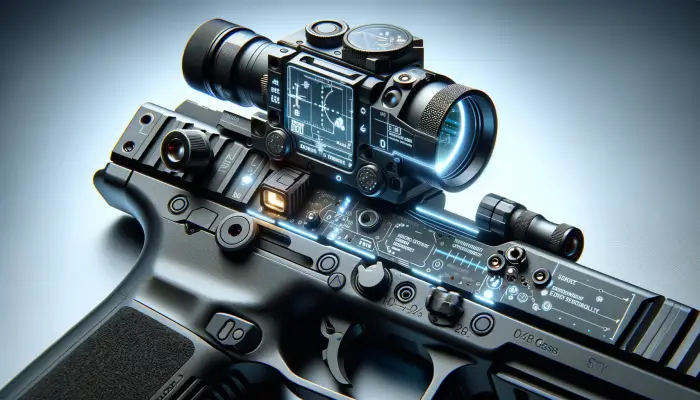
Modern handgun optics have transformed pistol shooting. Red dots enable faster target acquisition and improved accuracy, while quality night sights ensure visibility in low-light conditions. Whether you’re upgrading a carry pistol, building a competition gun, or simply want better sights, understanding your options helps you make informed choices.
This guide covers pistol-mounted red dots, night sights, and optic considerations specific to handgun applications.
Table of Contents
- Why Upgrade Pistol Sights?
- Pistol Red Dot Sights
- Tritium Night Sights
- Choosing Pistol Optics
- Mounting Considerations
- Training with Optics
- Pistol-Specific Guides
Why Upgrade Pistol Sights?
Faster Target Acquisition
Red dot sights project the aiming point onto the target plane, eliminating the need to focus on front sight, rear sight, and target simultaneously. Shooters consistently report faster target acquisition with red dots once the initial learning curve passes. Competition shooters have embraced pistol optics for the speed advantage.
Low-Light Visibility
Standard pistol sights become invisible in low light—exactly when you might need them most. Tritium night sights glow continuously without batteries or ambient light. Illuminated red dots remain visible regardless of lighting conditions. Defensive pistols benefit significantly from low-light capable sights.
Accuracy Improvement
Red dots simplify the aiming process, often improving accuracy especially for shooters with vision limitations. Aging eyes struggle with traditional sight focus requirements; red dots accommodate presbyopia by allowing single focal plane aiming. Many shooters see immediate accuracy improvements with optics.
Pistol Red Dot Sights
Open vs. Enclosed Emitters
Open-emitter red dots (Trijicon RMR, Holosun 507C, Leupold DeltaPoint Pro) expose the LED emitter to the environment. They’re lighter and offer larger windows but can be blocked by debris or water. Enclosed-emitter designs (Aimpoint ACRO, Holosun EPS) protect the emitter completely, ensuring the dot remains visible regardless of environmental conditions. Duty and defensive use increasingly favors enclosed emitters.
Dot Size
Pistol red dots typically offer 3-6 MOA dots. Smaller dots (3-3.5 MOA) offer more precision for target shooting. Larger dots (6 MOA) acquire faster at defensive distances. Competition shooters often prefer smaller dots; defensive users trend toward larger. Some optics offer selectable reticles or circle-dot combinations.
Durability Requirements
Pistol slides generate significant G-forces during cycling—far more than rifle-mounted optics experience. Optics must withstand thousands of rounds of recoil. Budget rifle red dots often fail quickly on pistol slides. Invest in optics specifically rated for slide mounting: Trijicon RMR, Holosun 507/407 series, Aimpoint ACRO, and similar purpose-built units.
Battery Considerations
Pistol optics should offer extended battery life and accessible battery replacement without removing the optic. Top-loading batteries (Holosun EPS) allow replacement without re-zeroing. Shake-awake features preserve battery when the pistol isn’t in use. Solar backup (Holosun) provides emergency power and extends battery life.
Tritium Night Sights
How Tritium Works
Tritium is a radioactive hydrogen isotope that glows continuously without external power or charging. Tritium vials in night sights provide illumination for 10-12 years before requiring replacement. The glow is most visible in complete darkness and progressively less visible as ambient light increases.
Tritium vs. Fiber Optic
Fiber optic sights gather ambient light for bright daytime visibility but don’t glow in darkness. Tritium provides darkness visibility but appears dim in daylight. Tritium-fiber optic combinations (Truglo TFX, Ameriglo Pro-i-Dot) offer both capabilities. Consider your primary use conditions when selecting sight type.
Sight Configuration
Three-dot configurations (tritium front and rear) provide quick alignment references. Single-dot (tritium front only) reduces clutter and emphasizes front sight focus. Various outline colors and shapes aid rapid sight acquisition. Personal preference and training background influence which configuration works best for individual shooters.
Quality Considerations
Trijicon, Ameriglo, XS Sights, and Night Fision manufacture quality night sights. Avoid unknown brands with unclear tritium sources. Quality sights use properly regulated tritium and maintain brightness throughout their service life. Budget night sights often dim rapidly or use inadequate construction.
Choosing Pistol Optics
For Defensive Use
Defensive pistols prioritize reliability, durability, and speed. Enclosed-emitter optics (Aimpoint ACRO, Holosun EPS) provide most reliable dot visibility. Larger dots (6 MOA) acquire faster at typical defensive distances. Battery life should exceed one year of daily carry. Suppressor-height iron sights provide backup capability.
For Competition
Competition use allows more specialized choices. Open-emitter optics offer larger windows and lighter weight. Smaller dots provide precision for A-zone hits at distance. Battery replacement accessibility matters for match preparation. Footprint compatibility ensures mounting options across multiple platforms.
For Target and Recreational Shooting
Casual target shooting tolerates more optic variety. Larger windows aid target acquisition. Durability requirements are less severe than defensive use. Budget optics serve recreational applications adequately, though quality glass provides better shooting experience.
For Astigmatism
Astigmatism causes red dots to appear as starbursts or streaks rather than clean dots. Some shooters with astigmatism find certain optics work better than others. Holographic sights often appear cleaner to astigmatic shooters. Prism sights offer etched reticles unaffected by eye conditions. Testing optics before purchase helps identify compatible options.
Mounting Considerations
Optic Footprints
Different optics use different mounting patterns. The Trijicon RMR footprint (also used by Holosun 507C/407C) has become the most common. Shield RMSc footprint serves smaller optics for subcompact pistols. Aimpoint ACRO uses a proprietary footprint. Verify compatibility between your chosen optic and slide cut before purchasing.
Slide Cuts
Factory optics-ready pistols include milled slides with mounting plates for various optic footprints. Aftermarket slide milling services cut existing slides for specific optics. Direct milling (no adapter plates) provides the lowest mounting height and most rigid attachment. Plate systems offer flexibility but add height and potential failure points.
Backup Irons
Suppressor-height iron sights (taller than standard sights) allow co-witnessing with mounted optics. Absolute co-witness places irons in the optic window; lower 1/3 co-witness positions irons below the dot. Iron backup provides aiming capability if the optic fails. Most defensive users prefer co-witnessing capability.
Training with Optics
The Learning Curve
Transitioning to red dots requires dedicated practice. The dot must be found through consistent presentation rather than hunting. Most shooters need 500-1000 rounds of focused practice before red dot acquisition becomes faster than irons. Dry fire practice accelerates the learning curve significantly.
Consistent Presentation
Red dot success depends on presenting the pistol to the same position every time. If your presentation is inconsistent, you’ll hunt for the dot. Work on grip consistency, drawstroke mechanics, and eye position. The dot should appear immediately when the pistol reaches presentation.
Target Focus
Unlike iron sights requiring front sight focus, red dots allow target focus. The dot superimposes on the target while maintaining visual focus on the threat or target. This represents a fundamental shift in aiming technique that takes time to internalize.
Pistol-Specific Guides
Explore our detailed pistol sight recommendations:
Night Sights by Model
- Best Night Sights for Springfield XDM
- Best Night Sights for Glock 17
- Best Night Sights for Shield 9mm
- Best Sights for FN PS90
Pistol Scopes and Red Dots
- Burris 2×20 Handgun Scope Review
- Burris Pistol Scope 2-7x32mm Review
- Best Pistol Red Dots for Astigmatism
Conclusion: Upgrade Your Handgun Sights
Modern pistol optics offer genuine performance improvements over traditional iron sights. Red dots speed target acquisition and improve accuracy for many shooters. Night sights ensure visibility when standard sights disappear. Match your optic choice to your primary use case—defensive, competitive, or recreational—and invest in quality appropriate to your needs.
Remember that optics require training to use effectively. Budget time for practice when transitioning to red dots. The investment in learning new sight systems pays dividends in improved shooting performance across all pistol applications.