
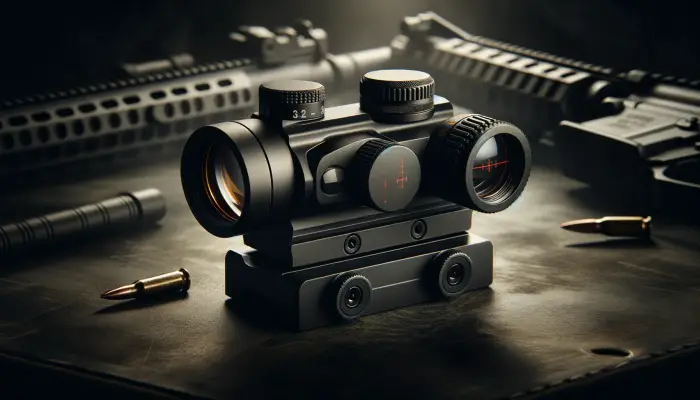
Red dot and reflex sights have revolutionized how shooters acquire targets and engage with speed and precision. Whether you’re building a home defense carbine, equipping a competition pistol, or setting up a tactical rifle, understanding the differences between red dot technologies, mounting options, and feature sets is crucial for making the right choice.
This comprehensive guide covers everything from the fundamental technology behind red dot optics to specific recommendations for different shooting applications. We’ll explore open vs. enclosed emitters, battery life considerations, MOA vs. MIL adjustments, and co-witnessing with iron sights.
Table of Contents
- How Red Dot Sights Work
- Types of Red Dot Sights
- Key Features to Consider
- Red Dots for Rifles and Carbines
- Pistol-Mounted Red Dots (MRDS)
- Red Dots for Shotguns
- Budget and Value Considerations
- Mounting and Co-Witnessing
How Red Dot Sights Work
Red dot sights project an illuminated reticle onto a lens using an LED emitter. Unlike traditional scopes that use etched glass reticles, the red dot appears to float in space at infinity, allowing both eyes to stay open while maintaining peripheral vision.
Reflex Sight Technology
Open reflex sights use a curved lens to reflect LED light back to the shooter’s eye. The single-pane design offers unlimited eye relief and a wide field of view. Brands like Trijicon with the RMR and Holosun with their various offerings dominate this category. The exposed emitter is the main trade-off—debris or rain can potentially block the dot.
Enclosed Emitter Designs
Tube-style red dots like the Aimpoint PRO or Trijicon MRO protect the emitter inside a sealed housing. This makes them more durable and reliable in harsh conditions, though they add weight and reduce field of view compared to open designs. For duty use or combat applications, enclosed emitters are generally preferred.
Holographic Sights
EOTech pioneered holographic weapon sights (HWS) that use laser holography to project a reticle. The technology creates a reticle that appears sharper for shooters with astigmatism and offers faster target acquisition at close range. However, holographic sights consume more battery power than LED-based red dots.
Types of Red Dot Sights
Full-Size Rifle Optics
Designed for AR-15s, AKs, and similar platforms, full-size red dots like the Aimpoint Comp M5 or Sig Sauer Romeo 5 offer extended battery life, rugged construction, and easy mounting on Picatinny rails. Most feature 1x magnification with options for flip-to-side magnifiers.
Micro Red Dots
Compact units designed for pistol slides, shotgun ribs, or lightweight rifle builds. The Trijicon RMR, Holosun 507C, and Leupold DeltaPoint Pro are popular choices. Footprint compatibility is crucial—different optics use different mounting patterns.
Miniature Reflex Sights (MRDS)
The smallest category, designed specifically for pistol slides. These must withstand significant recoil forces while maintaining zero. The Shield RMS, Sig Romeo Zero, and Holosun 407K represent this category, with varying degrees of durability and features.
Key Features to Consider
Dot Size (MOA)
Red dot size is measured in Minutes of Angle (MOA). A 2 MOA dot is approximately 2 inches at 100 yards—precise enough for longer shots. A 6 MOA dot covers more area but acquires faster at close range. Competition shooters often prefer 2-4 MOA, while defensive users typically choose 4-6 MOA for faster acquisition.
Battery Life
Modern red dots range from 50,000+ hours (Aimpoint, some Holosun models) to 1,000 hours (holographic sights). Shake-awake technology puts the optic to sleep when motionless, extending battery life significantly. Solar backup panels on some Holosun models provide indefinite runtime in good lighting.
Reticle Options
Beyond simple dots, manufacturers offer circles with center dots (EOTech 65 MOA ring), multiple dot patterns, and BDC reticles for holdover at distance. The Holosun “Circle Dot” reticle is particularly popular, offering the speed of a large ring with the precision of a small center dot.
Durability and Water Resistance
Look for IPX ratings (IPX7 or IPX8 for submersion), shock ratings, and construction materials. Aluminum housings are standard; titanium offers weight savings at premium prices. Night vision compatibility (NV settings) matters for tactical users.
Red Dots for Rifles and Carbines
AR-15 and carbine users have the widest selection of red dot options. For detailed comparisons of specific models, see our in-depth reviews:
- Premium Tier: Aimpoint Comp M5, Trijicon MRO, EOTech EXPS3
- Mid-Range: Sig Sauer Romeo 5, Holosun 510C, Vortex UH-1 Gen II
- Budget-Friendly: Sig Romeo MSR, Primary Arms SLx MD-25
Magnifier Pairing
Adding a 3x or 6x flip-to-side magnifier extends a red dot’s effective range significantly. The Aimpoint 3XMag, Vortex Micro 3x, and EOTech G33 are popular magnifier options that pair well with their respective red dots.
Pistol-Mounted Red Dots (MRDS)
Pistol red dots require specific considerations: slide-cut compatibility, durability under recoil, and battery access without removing the optic. The learning curve involves developing a consistent presentation to find the dot quickly.
Popular Footprints
The RMR footprint (used by Trijicon RMR and Holosun 507C/407C) is the most widely supported. The Shield RMS footprint is smaller, used on many factory optics-ready pistols. The Deltapoint Pro footprint and Aimpoint ACRO footprint represent other standards.
Training Considerations
Transitioning to pistol red dots requires dedicated dry fire practice. The dot must be found through consistent grip and presentation, not by hunting for it. Most shooters see improvement in practical accuracy after 500-1000 rounds of focused practice.
Red Dots for Shotguns
Shotgun applications range from home defense to competition to turkey hunting. Red dots must handle significant recoil and often mount to non-standard rail systems. The Aimpoint Micro series, Holosun 510C, and Vortex Venom are popular shotgun choices.
Turkey and Slug Hunting
For hunting applications, red dots allow precise slug placement and tight turkey patterns at extended ranges. The ability to quickly acquire a moving bird is a significant advantage over bead sights.
Budget and Value Considerations
Entry-Level (Under $200)
The Sig Sauer Romeo 5 and Holosun 403 series offer remarkable value with features like shake-awake and respectable durability. Primary Arms and Bushnell also compete in this range with solid offerings.
Mid-Range ($200-$400)
Holosun’s 510C and 507C series, the Trijicon MRO, and Aimpoint PRO occupy this space. Durability improves significantly, with better warranty support and proven track records.
Premium ($400+)
Aimpoint Comp M5 and Duty series, Trijicon RMR Type 2, and EOTech holographic sights represent the premium tier. These are proven in military and law enforcement use with exceptional durability and warranty support.
Mounting and Co-Witnessing
Absolute vs. Lower 1/3 Co-Witness
Mounting height determines how iron sights align with the red dot. Absolute co-witness centers the irons in the optic window—useful as a backup but clutters the view. Lower 1/3 co-witness places irons in the bottom third, keeping the dot clear while maintaining backup capability.
Quick-Detach Mounts
QD mounts from LaRue, Scalarworks, and Bobro allow rapid removal while maintaining zero upon remount. The LEAP mount from Scalarworks has become an industry favorite for its low profile and reliability.
Riser and Offset Mounts
Unity Tactical’s FAST mount and similar risers elevate optics for heads-up shooting and easier use with night vision devices. Offset mounts position a mini red dot at 45 degrees for close-range backup on a magnified rifle.
Conclusion: Choosing Your Red Dot
The best red dot sight matches your intended use, budget, and training commitment. Competition shooters may prioritize large windows and precise dots. Defensive users need reliability and quick acquisition above all. Hunters benefit from compact, waterproof options with extended battery life.
Start by defining your primary use case, then work within your budget to find the features that matter most. Any quality red dot from reputable manufacturers like Aimpoint, Trijicon, EOTech, Holosun, Sig Sauer, Vortex, or Leupold will serve you well with proper mounting and zero confirmation.
Related Red Dot and Reflex Sight Reviews
Explore our in-depth reviews and comparisons of specific red dot sights:
Red Dot Comparisons
- 3 MOA vs 6 MOA Red Dot Comparison Guide
- Aimpoint vs RMR Red Dots Comparison
- Holosun 510C vs Vortex Strikefire II
- Holosun 510c Green vs Red Comparison
- EOTech vs Vortex Comparison Guide
- EOTech XPS vs EXPS Comparison
Pistol Red Dots
- Best Red Dot for Desert Eagle
- Best Red Dot Sights for Glock 27
- Best Red Dot for Ruger Mark III Competition