
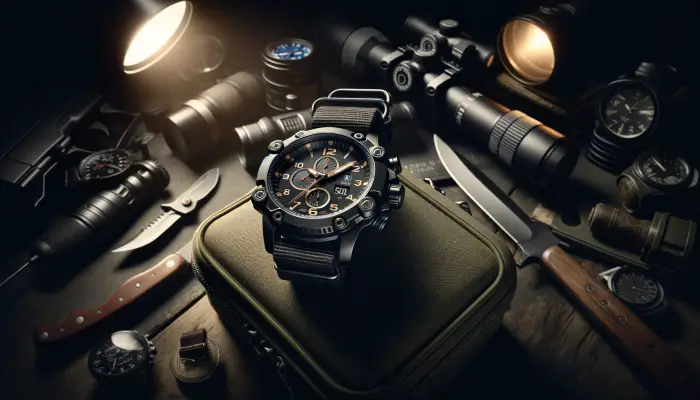
Finding the right GPS watch for hunting can mean the difference between confidently navigating unfamiliar backcountry and getting turned around when you need to track back to your truck at dusk. After researching 23 models and analyzing feedback from hunters on forums like Rokslide and ArcheryTalk, we’ve identified seven GPS watches that deliver the navigation accuracy, battery endurance, and rugged durability serious hunters demand. Whether you’re tracking elk across Colorado’s high country, sitting a whitetail stand in thick timber, or running upland bird dogs across open prairie, these watches offer features specifically designed for hunting scenarios—from automatic shot detection to sunrise/sunset alerts and waypoint marking for blood trails. This guide breaks down each watch’s strengths, limitations, and ideal use cases to help you choose the right tool for your next hunt.
Overview: GPS Watches for Hunting and Survival
GPS watches have evolved from simple navigation tools into sophisticated hunting companions. Modern hunting watches combine multi-satellite positioning systems, topographic mapping, barometric altimeters, and fitness tracking into wrist-worn packages that can survive extreme temperatures, water exposure, and rough handling. The best models offer battery life measured in weeks rather than days, eliminating the anxiety of a dead watch mid-hunt. Unlike smartphone GPS apps, dedicated hunting watches don’t require cellular service, won’t drain your phone battery, and provide glanceable navigation without pulling out a device that could spook game.
Advantages
- Navigate to and from stands in darkness without phone dependency—mark your parking spot and always know distance and direction back, even in thick timber
- Multi-week battery life with solar charging eliminates charging anxiety on extended backcountry hunts where power access is limited
- Real-time weather alerts from barometric pressure changes warn of incoming storms, critical for mountain hunting safety
- Waypoint marking lets you instantly save blood trail locations, shot sites, stand positions, and game recovery points
- Sunrise/sunset times and moon phase data help plan hunting windows without consulting separate apps or calendars
Disadvantages
- Premium hunting watches with full mapping cost $500-$1,600, representing a significant investment compared to handheld GPS units or smartphone apps
- Learning curve for maximizing features—many hunters report only using basic navigation functions despite paying for advanced capabilities
- Smaller displays than dedicated handhelds make detailed map reading challenging, especially for aging eyes or when wearing gloves
Quick Comparison: GPS Watches for Hunting
| Watch | Price | GPS Battery | Weight | Maps | Water Rating | Best For |
|---|---|---|---|---|---|---|
| Garmin Instinct 2 Solar | $349 | 48 hrs (solar) | 52g | Breadcrumb only | 10 ATM | Value-focused hunters |
| Garmin Fenix 8 Solar | $1,099-$1,199 | 149 hrs (solar) | 95g (51mm) | Full TopoActive | 10 ATM | Backcountry explorers |
| Garmin Instinct 2X Solar Tactical | $499 | 60 hrs (145 solar) | 67g | Breadcrumb only | 10 ATM | Tactical/stealth hunters |
| Garmin Tactix 7 Pro | $1,099-$1,599 | 89 hrs (122 solar) | 89g | Full TopoActive | 10 ATM | Premium tactical users |
| Suunto Traverse Alpha | $399 | 10-100 hrs | 75g | Breadcrumb only | 10 ATM | Shot-tracking hunters |
| Coros Vertix 2 | $699 | 140 hrs (240 UltraMax) | 89g | Free downloadable | 10 ATM | Extreme expeditions |
| Amazfit T-Rex 3 | $279 | 42-180 hrs | 67g | Basic TOPO | 10 ATM | Budget-conscious hunters |
Top 7 GPS Watches for Hunting and Survival
1. Garmin Instinct 2 Solar

The Garmin Instinct 2 Solar has earned its reputation as the workhorse GPS watch for hunters who prioritize reliability over flashy features. Weighing just 52 grams with a 45mm case, it sits comfortably under jacket cuffs without snagging. The solar-charging Power Glass display extends battery life up to 48 hours in GPS mode—or unlimited smartwatch use with adequate sun exposure (3+ hours daily at 50,000 lux). According to OutdoorGearLab testing, GPS accuracy proved excellent, tracking within a handful of meters on measured courses. The monochrome display won’t impress anyone with graphics, but it’s perfectly readable in direct sunlight and preserves battery life. Built to MIL-STD-810 standards with 10 ATM water resistance, hunters on Rokslide forums report using them through multiple seasons of hard hunting with minimal wear. The watch pairs with Garmin’s Alpha dog tracking systems and TT 15 collars—a crucial feature for bird hunters and houndsmen. While it lacks full topographic maps, the Track Me function and breadcrumb navigation have “bailed hunters out going in and out in the dark several times,” according to forum users. One noted limitation from CleverHiker testing: the watch regularly shorted elevation gain by as much as 500 vertical feet on bigger vert days, though horizontal distance remained accurate.
Pros
- Solar charging delivers up to 48 hours GPS runtime and potentially unlimited smartwatch battery with outdoor exposure—hunters report going 3+ weeks between charges
- Lightweight 52g build with comfortable fit under layering systems; won’t snag on bowstrings or rifle stocks
- Pairs with Garmin Alpha dog tracking units and TT 15 collars for bird hunters and houndsmen
- Sunrise/sunset times, moon phases, barometric storm alerts, and weather widgets available at a glance
- GPS accuracy within +/-0.11 miles over 2.8-mile test distances per independent testing—reliable in forests and steep terrain
Cons
- No topographic maps—only breadcrumb/track-back navigation, limiting usefulness for route planning in unfamiliar territory
- Monochrome display feels dated compared to AMOLED competitors; limited visual appeal for those who also want a daily-wear smartwatch
- Single-band GPS (not multi-band) may show slightly less accuracy in challenging environments like deep canyons; elevation tracking can underreport by 500+ feet on mountain hunts
2. Garmin Fenix 8 Solar

The Garmin Fenix 8 Solar represents Garmin’s flagship outdoor watch, delivering features that serious backcountry hunters will use. Available in 43mm, 47mm, and 51mm sizes, the largest version pushes GPS-only runtime to 149 hours—a 22% increase over the Fenix 7’s 122 hours—with the new solar ring providing 50% more solar power than its predecessor. The 280×280 pixel transflective display with Power Sapphire lens balances visibility and scratch resistance, while the titanium bezel handles abuse. DC Rainmaker’s in-depth review confirmed outstanding GPS tracking across urban, mountain, and forest environments with minimal signal loss. For hunters, the Fenix 8 introduces voice commands via built-in microphone—start activities or set alarms without fumbling with buttons while gloved. The watch also includes a dedicated “Hunting” activity profile for tracking hunts and marking waypoints directly. Preloaded TopoActive maps, ClimbPro elevation tracking, and multi-band GNSS support make this watch capable of replacing a dedicated handheld for many applications. According to GearJunkie, the Fenix 8 has “every feature any outdoors enthusiast could want” with proven durability. GPS accuracy is essentially identical to the Fenix 7 Pro in most conditions—for North American hunts, you won’t notice a difference, though the Fenix 8 adds QZSS and BeiDou support for better coverage in Asia-Pacific regions. The premium $1,099-$1,199 price point won’t suit every budget, but hunters who need full mapping capability get proven performance.
Pros
- 149-hour GPS battery life (51mm version) with solar charging—22% longer than the Fenix 7 and handles multi-week backcountry hunts without recharging
- Full topographic mapping with easy layer switching and offline functionality; dedicated Hunting activity profile for hunt-specific tracking
- Voice commands via built-in microphone for hands-free operation in cold weather or when wearing heavy gloves
- Multi-band GPS with all satellite systems for reliable tracking in deep canyons and heavy timber where single-band watches struggle
- Dynamic round-trip routing generates circular paths from your location—useful for scouting new areas
Cons
- Premium $1,099-$1,199 price makes this a significant investment; the Fenix 7 Pro at $429-$749 offers 95% of performance for less
- 51mm version at 95g is noticeably heavier than competitors—some users report fatigue during extended wear
- Solar charging requires 10+ hours of direct sunlight to meaningfully impact battery—less useful when hunting shaded timber
3. Garmin Instinct 2X Solar Tactical
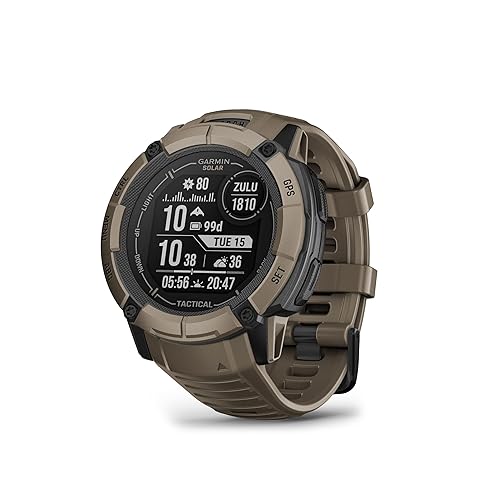
The Garmin Instinct 2X Solar Tactical hits a sweet spot for hunters who want serious capability without four-figure pricing. At 50mm, it’s larger than the standard Instinct 2 but maintains a manageable 67g weight. The Tactical edition adds features that translate directly to hunting: stealth mode stops GPS position sharing and disables wireless connectivity (no buzzing notifications while in your stand), a green flashlight mode preserves night vision, and night vision goggle compatibility ensures the display doesn’t blow out your adapted eyes. The Power Glass lens is 50% more efficient than previous generations, delivering 40 days in smartwatch mode or 60 hours of GPS tracking—and with adequate sun exposure, battery life becomes essentially unlimited. Outdoor Life’s review praised the built-in flashlight as “significantly brighter with more throw” than a smartphone light. For long-range hunters, the watch supports Garmin’s Applied Ballistics app ($100 Ultralight, $300 Elite) to calculate firing solutions on your wrist. Forum users describe the tactical features as genuinely useful rather than gimmicky: “The stealth mode prevents notifications while in the stand, and multi-frequency positioning gets more accurate tracking back to the truck.”
Pros
- Stealth mode disables GPS sharing and wireless connectivity—no buzzing or screen lights while hunting from stands
- Green flashlight mode and NVG compatibility preserve night vision during pre-dawn approaches and post-sunset tracking
- Multi-band GPS (L1 and L5 frequencies) plus all GNSS systems for improved accuracy in challenging terrain
- Supports Applied Ballistics app for long-range shooting solutions—firing calculations on your wrist
- MIL-STD-810 construction with 10 ATM water resistance; users report surviving full deployments in harsh conditions
Cons
- No topographic maps—shares the standard Instinct’s breadcrumb-only navigation limitation
- Monochrome MIP display with no touchscreen; navigation requires learning the 5-button interface
- Applied Ballistics app requires additional $100-$300 purchase beyond watch price for full ballistic features
4. Garmin Tactix 7 Pro
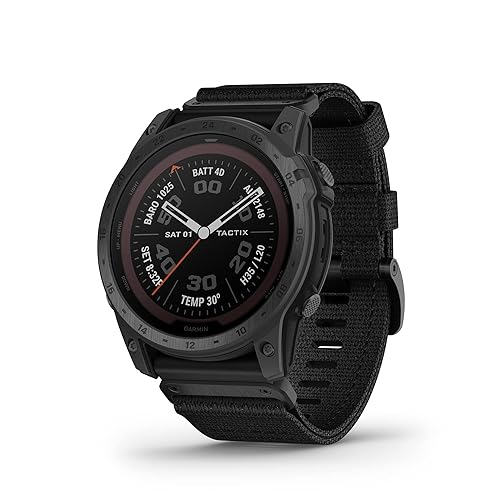
The Garmin Tactix 7 Pro represents the pinnacle of tactical GPS watches, and for hunters who operate in the most demanding conditions, it justifies its premium positioning. The 51mm titanium-bezel build houses a 1.4″ 280×280 display behind Power Sapphire glass, delivering 89 hours of GPS-only runtime (122 hours with solar). Shooting News Weekly’s gear review highlighted the watch’s specialized hunting features: dedicated Hunt Activity mode tracks your hunt and marks waypoints directly on the watch, while the barometer-based storm alert system can warn of pressure drops that send game into cover. The dimmable white/green LED flashlight provides utility after dark, and the touchscreen/button hybrid interface works reliably with gloves. For the Ballistics Edition ($1,599), Applied Ballistics Elite software is preloaded, calculating long-range shooting solutions in the field. Best Buy reviews consistently praise the “insane” 3-week battery life and LED flashlight’s unexpected usefulness. However, at 89g plus strap, it’s hefty—”over 11 ounces with the nylon band, and you notice it after a while,” per one reviewer. Button corrosion issues have affected some units, a frustrating flaw at this price point.
Pros
- Dedicated Hunt Activity mode with hunt-specific waypoint marking—designed specifically for tracking hunting activities
- Full TopoActive and ski maps preloaded with multi-band/multi-GNSS support for elite navigation accuracy
- Dimmable white/green LED flashlight with NVG-compatible display; stealth mode and kill switch for security
- Barometer-based storm alerts warn of incoming weather based on pressure changes—crucial for mountain safety
- Jumpmaster mode, projected waypoints, and dual-position GPS formatting for backcountry navigation precision
Cons
- $1,099-$1,599 price point puts it beyond most recreational hunters’ budgets; features may exceed needs for stand hunting
- Hefty 89g case weight plus nylon band creates noticeable wrist fatigue during extended wear
- Some users report button corrosion issues—concerning given premium pricing and tactical positioning
5. Suunto Traverse Alpha

The Suunto Traverse Alpha stands alone as a watch designed from the ground up specifically for hunters and anglers. Its signature feature—automatic shot detection—uses the built-in accelerometer to detect when you fire and automatically logs a GPS waypoint at each shot location. For hunters recovering wounded game or documenting harvest locations, this hands-free tracking proves invaluable. HuntTested’s review called it “one of the most important pieces of equipment they own.” The 2.65-ounce watch houses a stainless steel bezel and sapphire crystal in a composite case rated to MIL-STD-810G standards. GoHunt’s in-depth look confirmed GPS accuracy within 15-20 feet and satellite fixes in under 15 seconds even with 50% sky coverage—noticeably faster than competitors in dense foliage. The red backlight preserves night vision during pre-dawn sits, while hunting-specific modes separate it from general outdoor watches. Battery life hits 10 hours in high-accuracy GPS mode (1-second recording) or up to 100 hours with minute intervals. Note on shot detection: Suunto documentation confirms it works best with rifles and shotguns, and right-handed shooters may get more reliable detection wearing the watch on their trigger hand. The Traverse Alpha shows its age compared to newer releases—no touchscreen, limited smart features—but for hunters who prioritize hunting-specific functionality over general smartwatch capabilities, it remains compelling.
Pros
- Automatic shot detection logs GPS waypoints each time you fire—invaluable for tracking shot locations and game recovery
- Red backlight preserves night vision during pre-dawn approaches and evening hunts; hunting-specific mode with optimized features
- Fast satellite acquisition—fixes in under 15 seconds even with 50% sky view; performs better in dense timber than many competitors
- Sapphire crystal and stainless steel bezel proved most durable in extended testing—minimal wear after heavy field use
- Dedicated hunting and fishing modes with moon phase calendar, sunrise alerts, and weather trend monitoring
Cons
- Aging platform—no touchscreen, limited smart features, and simpler interface compared to current Garmin models
- 10-hour battery life in accurate GPS mode is significantly shorter than solar-equipped competitors
- Shot detection may trigger false positives from other impacts and works best with watch on trigger hand; requires post-hunt waypoint cleanup
6. Coros Vertix 2
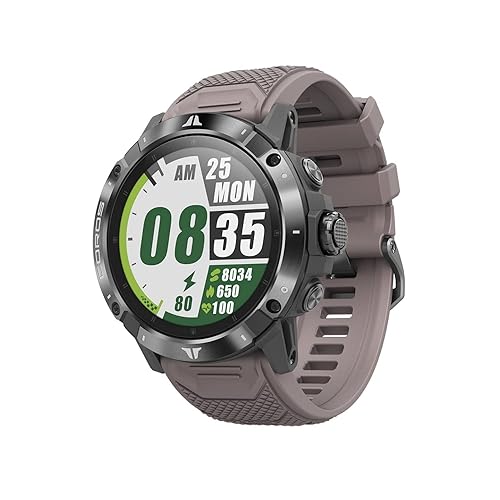
The Coros Vertix 2 has built its reputation on extreme battery life and expedition-grade durability, making it a compelling option for hunters who venture into harsh, remote environments. The headline spec: 140 hours of GPS tracking with standard GPS, or 240 hours in UltraMax mode—dwarfing most competitors. During extended backcountry hunts where recharging isn’t an option, this runtime provides genuine peace of mind. Coros pioneered simultaneous connection to all five global satellite systems (GPS, GLONASS, Galileo, BeiDou, QZSS) with dual-frequency capability. BASE Magazine’s review confirmed the watch delivers reliable plotting “between skyscrapers, towering rock walls or through dense woodland,” with GPS accuracy of +/- 0.03 miles in testing. The working temperature range of -30°C to 50°C (-22°F to 122°F) handles early-season alpine hunts and late-season cold snaps alike. With 32GB of onboard storage, you can download topographic, landscape, and hybrid maps free from Coros’s website for offline use. Outdoors Magic’s review noted the Vertix 2 “couldn’t be faulted” for accuracy during fell hiking, with battery percentage “barely budging” over two days of continuous GPS tracking. The trade-off: Coros’s app ecosystem and third-party integration lag behind Garmin’s mature platform, and there’s no turn-by-turn navigation—only deviation alerts if you wander off a pre-loaded route.
Pros
- 140-hour GPS battery (240 hours UltraMax) outperforms all competitors—tested at +/- 0.03 miles accuracy on measured courses
- Dual-frequency GPS with all five satellite systems delivers exceptional accuracy in challenging terrain
- Extreme temperature rating (-22°F to 122°F) handles alpine hunting conditions other watches can’t survive
- 32GB storage for offline topo maps downloadable free from Coros—no subscription required
- Storm alerts and barometric tracking with robust mountaineering features beyond basic navigation
Cons
- Coros app ecosystem less mature than Garmin’s; fewer third-party integrations and hunting-specific apps
- No hunting-specific modes or features like shot detection, dog tracking compatibility, or ballistics integration; no turn-by-turn navigation
- Only available in 50mm size—may be too large for smaller wrists; primarily optimized for endurance athletes over hunters
7. Amazfit T-Rex 3

The Amazfit T-Rex 3 delivers impressive outdoor capability at roughly half the price of comparable Garmin models, making it an attractive entry point for hunters testing whether a GPS watch fits their hunting style. The 1.5″ AMOLED display (480×480, 2,000 nits) provides the most vibrant, readable screen in this roundup—a genuine advantage when checking maps or data at a glance. CleverHiker’s GPS testing confirmed “clean tracking closely matching actual course distances with minimal drift even under tree cover.” The T-Rex 3 features a circularly polarized GPS antenna—a first in the T-Rex series—and supports five satellite systems (GPS, GLONASS, Galileo, BeiDou, QZSS) with dual-band capability. Battery life reaches 27 days standard use or up to 42 hours in the most accurate GPS mode (180 hours in energy-efficient mode). The 316L stainless steel bezel and MIL-STD-810 construction provide durability credentials, while the touchscreen works with gloves up to 2mm thick—legitimately useful in cold-weather hunting. DC Rainmaker’s testing showed accuracy within +/- 10 feet of landmarks during water activities. Turn-by-turn navigation with TOPO maps handles basic route guidance, though map detail and routing sophistication don’t match Garmin’s implementation—the watch required straying over 50 meters off course before triggering deviation notifications. At $279 MSRP (often discounted), the T-Rex 3 offers exceptional value for hunters who need reliable GPS and basic navigation without paying for features they won’t use.
Pros
- Exceptional 1.5″ AMOLED display with 2,000-nit brightness outperforms all competitors in this roundup for readability
- $279 MSRP offers outstanding value; frequently discounted to $250 or less during sales events
- Reliable GPS accuracy with dual-band support—tested within +/- 10 feet accuracy with minimal drift under tree cover
- Glove-compatible touchscreen (up to 2mm) maintains usability in cold-weather hunting scenarios
- MIL-STD-810 rating with 10 ATM water resistance and -22°F to 158°F operating range
Cons
- Heart rate monitor accuracy concerns—max HR readings significantly off versus chest strap monitors in testing
- Course deviation alerts require 50+ meters off-route before triggering; less sophisticated navigation than Garmin
- TOPO maps and navigation features less refined than Garmin’s implementation; proprietary charger required
Buyer’s Guide: How to Choose the Right Hunting GPS Watch
Match Features to Your Hunting Style
Stand hunters and whitetail specialists: If you primarily hunt from fixed locations, you don’t need full mapping capabilities. The Garmin Instinct 2 Solar or Instinct 2X Solar Tactical provides reliable track-back navigation to mark your truck and find your way out in darkness. The stealth mode on tactical editions prevents notifications from buzzing while you’re in the stand. Save $500+ by skipping premium mapping features you won’t use.
Western big game and backcountry hunters: Spot-and-stalk hunting across unfamiliar terrain demands full topographic mapping. The Garmin Fenix 8 Solar or Tactix 7 Pro allows real-time route planning, contour navigation, and detailed terrain analysis that breadcrumb-only watches can’t match. Multi-band GPS ensures reliable tracking in deep canyons and heavy timber.
Bird hunters with dogs: Compatibility with Garmin’s Alpha tracking systems and TT 15 collars should drive your decision. The Instinct 2 Solar pairs seamlessly with these systems, displaying dog locations on your wrist without pulling out a separate handheld unit.
Battery Life Considerations
Calculate your actual GPS runtime needs. Day hunts rarely exhaust even budget watches. Week-long backcountry trips without power access require 100+ hour GPS batteries. Solar charging helps, but requires adequate sun exposure—Garmin’s specs require 3+ hours daily at 50,000 lux (direct sunlight) for meaningful extension. Testing shows solar panels need 10+ hours of direct sunlight to significantly impact battery life, which is realistic in open alpine terrain but less so when hunting thick timber in November. The Coros Vertix 2’s 140-hour standard GPS runtime provides the largest margin for extended expeditions.
Mapping vs. Breadcrumb Navigation
Breadcrumb navigation (track-back) marks where you’ve been and guides you back along that path. It’s sufficient for most hunting scenarios: mark your truck, hunt, navigate back. Full topographic mapping lets you plan routes to locations you haven’t visited, evaluate terrain from your wrist, and make navigation decisions in unfamiliar country. This capability costs $300-$800 more. Be honest about whether you’ll use it.
Budget Recommendations
- Under $300: Amazfit T-Rex 3 offers the best feature-to-price ratio with reliable GPS and impressive display
- $300-$500: Garmin Instinct 2 Solar delivers proven reliability; Suunto Traverse Alpha adds hunting-specific shot detection
- $500-$750: Garmin Instinct 2X Solar Tactical provides tactical features without breaking into four figures; Coros Vertix 2 prioritizes battery endurance
- $1,000+: Garmin Fenix 8 Solar or Tactix 7 Pro for hunters who demand full mapping, maximum features, and premium build quality
Frequently Asked Questions
Do I need a GPS watch if I already have a smartphone with onX or HuntStand?
Smartphone apps work well for pre-hunt scouting and marking waypoints, but dedicated GPS watches offer advantages in the field. They preserve phone battery for emergencies, work without cellular service, provide instant glanceable navigation, and won’t spook game when checking your location. Many hunters use both: phone apps for detailed planning, watch for in-hunt navigation. Forum discussions consistently highlight that GPS watches have “bailed hunters out going in and out in the dark” when phone batteries died or service failed.
How accurate are GPS watches in heavy timber and steep terrain?
Multi-band GPS watches (Fenix 8, Instinct 2X, Tactix 7, Coros Vertix 2) perform significantly better in challenging environments than single-band models. Testing shows multi-band accuracy within 10-15 feet even under tree canopy and in canyons where single-band watches may struggle. The Suunto Traverse Alpha’s dual GPS/GLONASS system achieved satellite fixes in under 15 seconds with only 50% sky visibility during GoHunt testing—noticeably faster than some competitors in dense foliage.
Is solar charging useful, or just marketing?
Solar charging provides meaningful battery extension in the right conditions. Garmin’s spec requires 3+ hours daily at 50,000 lux (direct sunlight) for “unlimited” smartwatch battery. Hunters on Rokslide report going “3+ weeks between charges” with the Instinct 2X Solar during hunting seasons. However, testing from Wareable indicates the solar panel needs upwards of 10 hours in direct sunlight to have meaningful impact. Consider solar a useful extension for open-country hunting rather than true independence from charging when hunting shaded timber.
What’s the difference between breadcrumb navigation and full mapping?
Breadcrumb navigation records where you’ve walked and guides you back along that track—like leaving a trail of crumbs. It’s reliable for returning to your truck or stand but can’t help you navigate to places you haven’t been. Full topographic mapping displays terrain contours, trails, water features, and elevation on your watch, allowing route planning to new destinations and terrain analysis for hunting strategy. Most stand hunters find breadcrumb sufficient; backcountry spot-and-stalk hunters benefit from full mapping.
Which watch works best with Garmin dog tracking collars?
All Garmin Instinct and Fenix series watches pair with Garmin’s Alpha tracking handhelds and compatible collars like the TT 15 and TT 15 mini. The watch displays dog location and status on your wrist, reducing the need to pull out the handheld unit. The Instinct 2 Solar offers the best value for bird hunters wanting dog tracking integration without premium pricing.
Final Verdict
For most hunters, the Garmin Instinct 2 Solar offers the best balance of capability, durability, and value at $349. Its solar charging, reliable GPS (tested within +/-0.11 miles accuracy), dog tracking compatibility, and hunting-useful features like sunrise/sunset alerts and storm warnings handle 90% of hunting scenarios without complexity you won’t use.
If you hunt unfamiliar backcountry and need full mapping capability, step up to the Garmin Fenix 8 Solar. The premium price buys genuinely useful topographic navigation, 149-hour GPS battery life (22% longer than the Fenix 7), and a dedicated Hunting activity profile that justifies the investment for serious western hunters. Budget-conscious buyers should note the Fenix 7 Pro at $429-$749 offers 95% of the performance.
Budget-conscious hunters should consider the Amazfit T-Rex 3—its $279 price point delivers reliable GPS (within +/- 10 feet in testing) and an exceptional AMOLED display for basic navigation needs.
The Suunto Traverse Alpha remains the only watch with automatic shot detection, making it uniquely suited for hunters who want hands-free documentation of shot locations and game recovery points—just note it works best with the watch on your trigger hand for reliable detection.
Skip the premium tactical watches (Tactix 7 Pro, Instinct 2X Tactical) unless you specifically need stealth mode, NVG compatibility, or ballistics integration. Most hunters will never use these features enough to justify the price premium.
Sources: Testing data and specifications referenced from OutdoorGearLab, DC Rainmaker, CleverHiker, GoHunt, HuntTested, and hunter feedback from Rokslide and ArcheryTalk forums.