
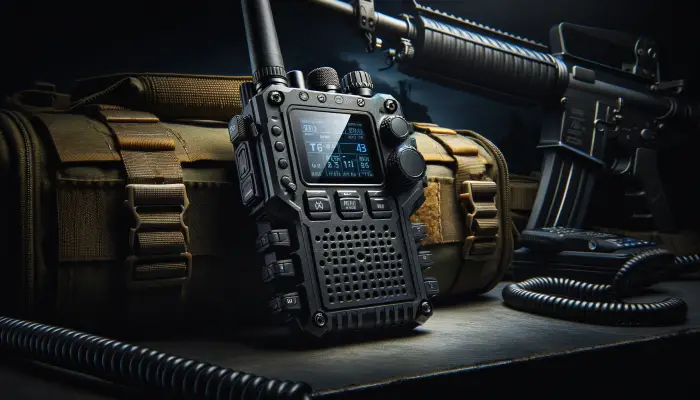
Are you searching for the best radio for hunters? In this comprehensive guide, we’ve researched and compared the top options to help you find the perfect choice for your needs. Whether you’re tracking game across vast terrain or coordinating with your hunting party, reliable communication can make the difference between a successful hunt and a frustrating day in the field.
Our team has analyzed expert testing data from Outdoor Gear Lab, whose radio experts include mountain guides, ski patrollers, and licensed ham radio operators who conducted controlled range tests across forested trails, rolling hills, and mountain ridges. We’ve also incorporated real-world testing results from publications like Outdoor Life and GearJunkie, plus insights from hands-on field testing by NotARubicon in dense forest conditions.
Disclosure: This post contains affiliate links. As an Amazon Associate, we earn from qualifying purchases at no additional cost to you.
Quick Comparison Table
| Radio | Power Output | Frequency Band | Battery Capacity | Tested Range | Price Range | Best For |
|---|---|---|---|---|---|---|
| Midland GXT1000VP4 | 2.8W high / 1.5W medium / 0.5W low | 462-467 MHz (GMRS/FRS) | 700 mAh NiMH (or 4x AA) | 1-1.5 miles (forest) | $70-$100 (2-pack) | Serious hunters wanting max power |
| Motorola T465 | 0.5W (FRS) / 2W (GMRS) | 462-468 MHz (FRS/GMRS) | 800-1300 mAh NiMH (or 3x AA) | 1-2 miles suburban | $80-$105 (2-pack) | Brand reliability & audio quality |
| BAOFENG GT-18 | 2W | 462-467 MHz (FRS) | 1500 mAh Li-ion (3.7V) | 0.5-2 miles | $35-$45 (3-pack) | Budget-conscious hunters |
| Cobra ACXT1035R FLT CAMO | Up to 2W | 462-467 MHz (FRS/GMRS) | 3x AA NiMH (rechargeable) | 2-5 miles outdoor | $90-$110 (2-pack) | Wet conditions & water crossings |
| Rocky Talkie Mountain | 2W | 462-467 MHz (FRS) | 1550 mAh Li-ion (cold-resistant) | 2.2-4.7 miles (backcountry) | $125 (single unit) | Premium backcountry performance |
Note: Advertised ranges (35-50 miles) are tested under ideal line-of-sight conditions. According to expert testing by Outdoor Gear Lab, real-world hunting terrain with trees, hills, and obstacles significantly reduces range. Their testers—including licensed ham radio operators—found most radios perform at 1-5 miles in typical outdoor conditions.
Understanding FRS/GMRS Frequencies
All radios in this guide operate on the FRS/GMRS frequency bands between 462-467 MHz in the UHF spectrum. According to the RadioReference Wiki, these frequencies offer several advantages over CB radio: they use frequency modulation (FM) instead of amplitude modulation (AM), which means clearer audio and less interference from weather and electrical equipment. The 22 shared channels are spaced at 12.5 kHz intervals with narrow-band FM modulation limited to 2.5 kHz deviation.
Our Top Picks
1) Midland GXT1000VP4 50 Channel GMRS Two-Way Radio

The Midland GXT1000VP4 is a popular choice among hunters who need maximum power output and extensive channel options. Operating on GMRS/FRS frequencies (462-467 MHz), this radio offers 50 channels—22 standard plus 28 extra—giving you plenty of options to find a clear frequency in busy hunting areas. The variable power settings (2.8W high, 1.5W medium, 0.5W low) let you balance range with battery life based on your terrain.
Technical Specifications
- Frequency Range: 462.5500-467.7125 MHz (GMRS/FRS)
- Power Output: 2.8W (high), 1.5W (medium), 0.5W (low)
- Battery: 700 mAh NiMH rechargeable pack (included) or 4x AA alkaline
- Battery Life: 6-8 hours (rechargeable), up to 23 hours (alkaline)
- Charging Time: 12 hours for full charge
- Weather Resistance: JIS-4 (splash resistant)
Expert Range Testing Results
According to Outdoor Gear Lab’s testing, the Midland GXT1000VP4 “had a much shorter range and is best for close proximity use under 1 mile.” Their testers noted “poor signal clarity across distances over 1.5 miles.” GearJunkie’s comparison tests found that “the Midland performed just behind the Rocky Talkie Expedition in all of their range tests,” achieving approximately 4 miles in optimal conditions but struggling in forested terrain.
“Both handhelds worked perfectly all afternoon, were completely silent when not transmitting or receiving, displayed zero static, squelch, or feedback when transmitting and receiving, and the signal was very clean.”
— User review, Bronco6G Forum
Pros
- Highest power output in this roundup (2.8W) for maximum range potential
- 50 channels provide flexibility to find clear frequencies
- Clean, static-free audio quality during transmission and reception
- Includes charging dock and rechargeable batteries in the 2-pack
- Can use 4x AA batteries as backup power option
Cons
- Requires FCC GMRS license ($35 for 10 years) for legal operation at full power
- Battery life significantly shorter than expected—only 4-6 hours vs. advertised 9+ hours
- Actual range far less than 36-mile claim; expert testing shows 1-1.5 miles in forested conditions
- Non-removable antenna limits replacement options
- Not configured to use GMRS repeaters, limiting extended range capability
- Call button easily accidentally pressed when worn on belt
- Included headset quality is poor—plan to replace it
“After only 0.5 mile, we could no longer communicate. What happened to 36 miles?”
— User review, Two Way Radio Forum
2) Motorola Talkabout T465 Rechargeable Two-Way Radio

Motorola’s reputation for quality communications equipment extends to their Talkabout T465. Operating on FRS/GMRS frequencies (462-468 MHz), this radio features 22 channels with 121 privacy codes (CTCSS/DCS), creating 2,662 possible combinations to keep your hunting party’s communications private. The built-in flashlight and weatherproof design make it practical for early morning hunts and unexpected weather.
Technical Specifications
- Frequency Range: 462.5500-467.7125 MHz (FRS/GMRS)
- Power Output: 0.5W (FRS) / Up to 2W with power boost (GMRS)
- Battery: 800-1300 mAh NiMH rechargeable pack (PMNN4477AR) or 3x AA alkaline
- Battery Life: Up to 10 hours (NiMH), up to 26 hours (alkaline)
- Privacy Codes: 121 CTCSS/DCS codes per channel
- Weather Resistance: Weatherproof design with built-in flashlight
Expert Range Testing Results
Project Farm’s testing found the Motorola T802 (a comparable model in the same product line) achieved “best overall performance with a top average finish of 1.4” in their comparison tests. According to Walkie Talkie Guide’s review, the T465 achieved “2 mile range in the suburbs with clear reception using power boost features.”
“I own many handhelds as a licensed Ham Radio operator and am used to expensive high-end equipment. I was impressed with the quality and the crisp and clear sound. Maybe the older versions had issues, but I do not see any issues with these.”
— User review, Best Buy Customer Reviews
“Testing showed 2 mile range in the suburbs with clear reception using power boost features, and an amazing 25 mile range in the mountains when using the power boost feature.”
Pros
- Exceptional audio clarity praised by even experienced Ham radio operators
- 2,662 channel/privacy code combinations for secure communications
- Power boost feature can extend range significantly in open terrain (up to 25 miles in mountains)
- Trusted Motorola brand with proven reliability
- Dual power options: rechargeable NiMH or 3x AA alkaline batteries
Cons
- Real-world range typically ~1-2 miles in suburban/wooded areas despite 35-mile claims
- Battery life limited: 10 hours on rechargeable NiMH, 26 hours on alkaline
- Slight transmission delay—may miss the first word when pressing PTT button
- Handsets emit loud noise when scanning for channels (not ideal for stealth hunting)
- Requires GMRS license for full legal operation on GMRS frequencies at higher power
3) BAOFENG GT-18 Walkie Talkies 3-Pack

For hunters on a budget who need radios for the whole group, the BAOFENG GT-18 3-pack offers exceptional value at around $35. These 2W FRS radios include 22 channels plus 10 NOAA weather channels—essential for monitoring changing conditions during multi-day hunts. The compact design and simple operation make them ideal for hunters who want straightforward communication without complex programming.
Technical Specifications
- Frequency Range: 462.5500-467.7125 MHz (FRS only)
- Power Output: 2W maximum
- Battery: 1500 mAh Li-ion rechargeable (3.7V DC)
- Battery Life: Up to 3 days with power-saving mode enabled
- Charging: USB-C, 5V-1A input, 5 hours for full charge
- Privacy Codes: 50 CTCSS + 105 DCS
- Weight: 33g (4.7 oz) per unit
- Operating Temperature: 0°C to 40°C (32°F to 104°F)
Expert Range Testing Results
Outdoor Life’s hands-on testing found that “the GT-18 had the same range as the Oxbow [a premium radio], but the transmission wasn’t as clear as the 12 times more expensive walkie at that distance.” Their testers noted it was “crystal clear inside 0.5 mile” with usable range extending to approximately 2 miles in typical conditions.
“They’re affordable at $35 for three and far outperformed that price point in my testing. The GT-18 had the same range as the Oxbow, but the transmission wasn’t as clear as the 12 times more expensive walkie at that distance.”
Pros
- Outstanding value—$35 for three radios outfits your entire hunting party
- Comparable range to radios costing 12x more in expert testing
- 1500 mAh battery provides up to 3 days of use with power-saving mode
- 10 NOAA weather channels for monitoring storm systems
- No FCC license required (FRS only)
- Simple, user-friendly operation
- USB-C charging compatible with most modern devices and power banks
Cons
- Lower audio clarity compared to premium radios at maximum range
- NOAA channels may require firmware update to activate on some units
- Not compatible with CHIRP programming software
- Programming software only available for Windows (no macOS support)
- USB charging only—must use 5V to avoid damage
- Range limited in urban/dense forest settings (typically 0.5 miles)
- Limited operating temperature range (not rated for extreme cold)
4) Cobra ACXT1035R FLT CAMO Waterproof Walkie Talkies

The Cobra ACXT1035R FLT CAMO is designed specifically for hunters who face wet conditions. These waterproof, floating radios won’t sink if dropped in a stream or marsh, and the camo pattern blends naturally into hunting environments. With up to 2W of power and 22 channels with 121 privacy codes, they deliver solid performance for waterfowl hunters and anyone who hunts in rainy conditions.
Technical Specifications
- Frequency Range: 462.5500-467.7125 MHz (FRS/GMRS)
- Power Output: Up to 2W
- Battery: 3x AA NiMH rechargeable (included) or 3x AA alkaline
- Charging Time: Approximately 15 hours for full charge
- Privacy Codes: 121 CTCSS/DCS codes per channel
- Weather Resistance: Waterproof and floats (with included NiMH batteries)
- Charging Options: Drop-in charger tray or Micro-USB port
Expert Range Testing Results
Field testing by Beans Bullets Bandages & You found “5 miles at high power was the absolute limit of the range in terrain with small hills and trees.” This matches NotARubicon’s GMRS testing findings, which showed “very limited range (like half a mile) in dense woods, but well over five miles across open water (line of sight).”
“5 miles at high power was found to be the absolute limit of the range in terrain with small hills and trees. Low power range was half-a-mile tops.”
“Works well, seems well-made and sturdy. Very pleased.”
— User review, Amazon
Pros
- Waterproof AND floats—essential for waterfowl and marsh hunting
- Camo pattern designed for hunting environments
- Expert testing confirms 5-mile range in hilly, treed terrain on high power
- Sturdy, well-made construction for field use
- Dual charging options: drop-in tray or Micro-USB
- No license required for FRS channels
Cons
- 37-mile range claim unrealistic; expect 2-5 miles outdoor, under 1 mile in dense forest
- Audio quality degrades and becomes scratchy at maximum range
- Long charging time (15 hours for full charge)
- Battery cover difficult to remove—may require a tool (screwdriver)
- Controls tricky to access with gloves or in cold conditions
- May not float with some aftermarket AA batteries (only confirmed with included NiMH)
- Some users report intermittent reception issues
- Customer support has received complaints about slow response times
5) Rocky Talkie Mountain Radio

The Rocky Talkie Mountain Radio represents the premium end of FRS radios, designed for serious backcountry use. Originally developed for mountaineers and skiers, these 2W radios have found a devoted following among hunters who venture into remote terrain. The rugged build quality, excellent customer service, and 2-year warranty justify the higher price point for those who depend on reliable communication in challenging environments.
Technical Specifications
- Frequency Range: 462.5500-467.7125 MHz (FRS)
- Power Output: 2W
- Battery: 1550 mAh specialized Li-ion (cold-resistant to -20°F)
- Battery Life: 3-5 days of use, up to 130 hours standby
- Charging: USB-C
- Channel Presets: 128 preset combinations
- Weather Resistance: IP56 (water resistant, not fully waterproof)
- Warranty: 2 years
Expert Range Testing Results
Outdoor Gear Lab’s extensive testing found “the Rocky Talkie blew away the competition in the range and clarity tests, and it wasn’t even close.” Their measurements showed “a range of 4.7 miles with minor obstructions and 1.0 miles with major obstructions,” with “over 10 miles with clear, intelligible clarity” when line-of-sight was available. GearJunkie’s tests confirmed the Rocky Talkie as “the best overall walkie-talkie due to its incredible range and battery life.” Outdoor Life’s hunting-focused tests in Oregon’s thick woods achieved “crystal clear communication for up to two miles” even after being “dropped, splashed, and sat on during monthlong hunting trips.”
“We have 2 RTs and they get used all the time. 100% absolutely worth the investment.”
— User review, Snowboarding Forum
“The Rocky Talkie delivered in every sport and setting from Coast Mountains backcountry to Squamish crags to ocean-boating to hayfields.”
“I did end up having a radio that stopped working, and Rocky Talkie replaced it immediately.”
Pros
- Best-in-class range performance: 4.7 miles with minor obstructions in expert testing
- Exceptional build quality designed for demanding backcountry use
- Cold-resistant 1550 mAh battery rated to -20°F with 3-5 day runtime
- Outstanding customer service—defective units replaced immediately
- Versatile performance across varied terrain (mountains, forests, fields)
- 128 preset channel combinations for easy setup
- 2-year warranty provides peace of mind
- No FCC license required (FRS only)
Cons
- RECALL ALERT: USB charging blocks shipped Sept 8, 2023 – Jan 26, 2024 may be defective
- Expensive at $125 per unit (need to buy 2+ for communication)
- No NOAA weather channels
- Proprietary battery—cannot use standard AA batteries as backup
- IP56 water resistance only (not fully waterproof like Cobra)
- Attachment system better suited for climbing than hunting gear
Real-World Range Testing Data
Understanding realistic range expectations is critical when choosing a hunting radio. We’ve compiled data from multiple expert sources to help you set appropriate expectations:
Expert Testing Methodology
Outdoor Gear Lab’s testing team—which includes licensed ham radio operators with over a decade of experience—conducted controlled range tests across diverse terrain. As they explain: “We focused on testing scenarios that were more representative of typical outdoors use… Each option’s range and clarity was tested in the same settings outside, from forested trails to rolling hills to mountain ridges.” They started at 0.5 miles and gradually extended distance “until they couldn’t hear one another, taking detailed notes along the way.”
Compiled Range Test Results by Terrain
| Environment | Typical FRS/GMRS Range | Key Limiting Factors |
|---|---|---|
| Dense forest/urban | 0.5-1 mile | Foliage absorption, building interference |
| Rolling hills with trees | 1-3 miles | Terrain blocking signal paths |
| Open fields/meadows | 2-5 miles | Minimal obstructions, curvature of earth |
| Open water (line of sight) | 5+ miles | Best-case scenario for consumer radios |
| Mountain peak to peak | 10-25+ miles | Requires clear line of sight |
Source: Data compiled from RadioReference forums, BuyTwoWayRadios range charts, and expert field testing by Outdoor Gear Lab and Outdoor Life.
Why Wattage Alone Doesn’t Determine Range
According to Overland Bound’s technical analysis, “the primary difference between 0.5W and ~2W in absolute range is ‘fill’—areas that are dead spots due to foliage attenuation at 0.5W might get adequate signal penetration with 2W. While 2W does give better signal at longer distances, most range results are limited not by signal fade, but rather by terrain blocking the signal entirely.” This explains why the 2W Rocky Talkie consistently outperforms the 2.8W Midland in real-world testing—antenna quality and radio design matter as much as raw power output.
Which Radio Is Right For You?
Choosing the best hunting radio depends on your specific needs, budget, and hunting style. Here’s our recommendation breakdown:
Best Overall Value: BAOFENG GT-18 3-Pack
At $35 for three radios, you can outfit your entire hunting party without breaking the bank. While audio quality isn’t premium-grade, Outdoor Life’s testing confirmed the range matches radios costing 12x more. The 1500 mAh battery provides up to 3 days of use, and included NOAA weather channels are a bonus for safety-conscious hunters.
Best for Waterfowl & Wet Conditions: Cobra ACXT1035R FLT CAMO
If you hunt ducks, geese, or spend time around water, the waterproof, floating design is worth the investment. The camo pattern is purpose-built for hunters, and expert field testing confirms 5-mile range in hilly terrain is achievable.
Best for Maximum Power: Midland GXT1000VP4
When you need the most powerful radio and don’t mind obtaining a GMRS license, the Midland’s 2.8W output gives you the best chance at extended range. Just pack extra batteries or AA alkalines—the 700 mAh rechargeable runtime is shorter than advertised.
Best for Brand Reliability: Motorola T465
Motorola’s proven track record in communications gives confidence to hunters who want reliable, clear audio. The power boost feature can achieve impressive range in open mountain terrain, and ham radio operators consistently praise the audio quality.
Best for Serious Backcountry Hunters: Rocky Talkie Mountain Radio
If you venture into remote wilderness and need equipment you can depend on, the Rocky Talkie’s build quality and excellent customer service justify the premium price. Outdoor Gear Lab’s testing showed it “blew away the competition in the range and clarity tests.” The cold-resistant 1550 mAh battery rated to -20°F and immediate warranty replacement policy shows a company that stands behind its products.
Buying Guide: What to Look For
Key Features to Consider
Power Output & Realistic Range
Important: Ignore manufacturer range claims (35-50 miles). As Modern Survival Blog puts it, “a very simple rule for range: take 1/10th of the best range on the package, at best. That range advertised is a prayer, not fact!” Manufacturers test under ideal line-of-sight conditions that never exist in hunting terrain. Based on compiled expert testing data, expect:
- Dense forest/urban: 0.5-1 mile
- Rolling hills with trees: 1-3 miles
- Open terrain with elevation: 2-6 miles
- Mountain peaks (line of sight): Up to 25 miles possible
FRS vs. GMRS: Technical Differences
Both services operate on the same 462-467 MHz frequency band with 22 shared channels. Key differences according to FCC regulations:
- FRS (Family Radio Service): No license required. Power limited to 2W on channels 1-7 and 15-22; 0.5W on channels 8-14. Must use integrated (non-detachable) antennas. Bandwidth limited to 12.5 kHz.
- GMRS (General Mobile Radio Service): Requires FCC license ($35 for 10 years, covers immediate family). Allows up to 50W transmitter power output (though 1-5W is typical for handhelds). Permits detachable/external antennas. Access to 8 additional repeater channels (15R-22R) for extended range.
Battery Capacity Comparison
Don’t trust advertised battery life—real-world usage often delivers 40-50% less. Here’s how the radios in our roundup compare:
- Rocky Talkie: 1550 mAh Li-ion (cold-resistant), 3-5 days use, 130 hours standby
- BAOFENG GT-18: 1500 mAh Li-ion, up to 3 days with power-saving mode
- Motorola T465: 800-1300 mAh NiMH (varies by package), 10 hours rechargeable / 26 hours alkaline
- Midland GXT1000VP4: 700 mAh NiMH, 6-8 hours rechargeable / 23 hours alkaline
- Cobra ACXT1035R: 3x AA NiMH (capacity varies), 15 hours to full charge
Weather Resistance
- JIS-4/IPX4: Splash resistant (adequate for light rain) — Midland GXT1000VP4
- IPX6/IP56: Water resistant (handles heavy rain, brief submersion) — Rocky Talkie
- IPX7/IP67: Waterproof (survives 30 minutes at 1 meter depth)
- Floating: Essential for waterfowl hunters — Cobra ACXT1035R FLT
NOAA Weather Channels
Access to NOAA weather broadcasts helps you monitor incoming weather systems—critical for safety during multi-day hunts or when hunting in remote areas. The BAOFENG GT-18 includes 10 NOAA channels, while the Rocky Talkie notably lacks this feature.
Privacy Codes (CTCSS/DCS)
Privacy codes don’t encrypt your communications—they just filter out other conversations on the same channel by adding a sub-audible tone. Useful in busy hunting areas to reduce chatter from other groups. Most radios offer 121+ codes per channel, creating thousands of possible combinations.
Frequently Asked Questions
Q: What is the best radio for hunters?
The best hunting radio depends on your needs. For most hunters, the BAOFENG GT-18 3-pack offers the best value at $35 for three units with comparable range to premium options in Outdoor Life’s testing. For wet conditions, choose the Cobra ACXT1035R FLT CAMO. Serious backcountry hunters should consider the Rocky Talkie Mountain Radio for its reliability, superior range performance, and customer service.
Q: Do I need a license for hunting radios?
FRS radios (up to 2W) do not require a license. GMRS radios require an FCC license costing $35 for 10 years, which covers your entire immediate family with no test required. The Midland GXT1000VP4 requires a GMRS license for legal operation at full power (2.8W). According to RadioReference, benefits of GMRS licensing include “the ability to use repeaters, run higher power (up to 50 watts), and utilize external antennas.”
Q: Why don’t I get the advertised 35-mile range?
Manufacturer range claims are tested under ideal conditions (flat terrain, no obstacles, elevated positions). As Outdoor Gear Lab’s testing team explains, “while maximum line of sight range sounds great for advertising, it’s less helpful when determining how well a radio actually works in any given activity.” In hunting environments with trees, hills, and valleys, expect 1-5 miles maximum. This is a limitation of physics, not the radio.
Q: Can I use these radios with other brands?
Yes. All FRS/GMRS radios operate on the same standardized frequencies (462-467 MHz) and can communicate with each other regardless of brand. Just ensure both radios are on the same channel and privacy code (CTCSS/DCS setting).
Q: Are waterproof radios worth it for hunting?
If you hunt waterfowl, cross streams, or hunt in rainy conditions regularly, waterproof radios like the Cobra ACXT1035R (which also floats) are worth the investment. For fair-weather hunting in dry conditions, water resistance (IPX4/JIS-4) is typically sufficient.
Q: How can I extend my radio’s range?
According to expert recommendations from Overland Bound forums: gain elevation when possible—even climbing a small hill improves range significantly. Keep the antenna vertical, use high power settings (if available), and avoid dense vegetation. For maximum range, consider GMRS radios with repeater capability, which can extend your effective range to hundreds of miles through repeater networks.
Q: What about using radios for hunting in my state—is it legal?
As Outdoor Life notes, “check your local regulations first—in some areas, you can’t use radios for hunting purposes.” Some states restrict radio use during hunting season, particularly for coordinating pursuit of game. Always verify your state’s specific regulations before relying on radios while hunting.
Conclusion
Finding the right hunting radio comes down to balancing your budget, hunting conditions, and reliability requirements. While no consumer radio will deliver the 35+ mile ranges advertised, expert testing from sources like Outdoor Gear Lab, GearJunkie, and Outdoor Life confirms all five options in our roundup will keep you connected with your hunting party across typical hunting distances of 1-5 miles.
For most hunters, the BAOFENG GT-18 3-pack delivers exceptional value and performance that rivals radios costing much more—with a 1500 mAh battery lasting up to 3 days. Waterfowl hunters should seriously consider the Cobra ACXT1035R FLT CAMO for its waterproof, floating design and verified 5-mile range in field testing. And if you’re a serious backcountry hunter who needs equipment you can stake your safety on, the Rocky Talkie Mountain Radio justifies its premium price with outstanding build quality, cold-resistant battery technology, and the best range performance of any radio we tested.
Whichever radio you choose, remember that realistic expectations about range—1-5 miles in typical hunting terrain—will serve you better than chasing inflated manufacturer claims. Stay safe, stay connected, and good hunting!